

How to use ChatGPT for marketing content without sounding robotic
Practical prompts, editing rules and a review checklist to make ChatGPT marketing content sound like your business instead of a generic AI.
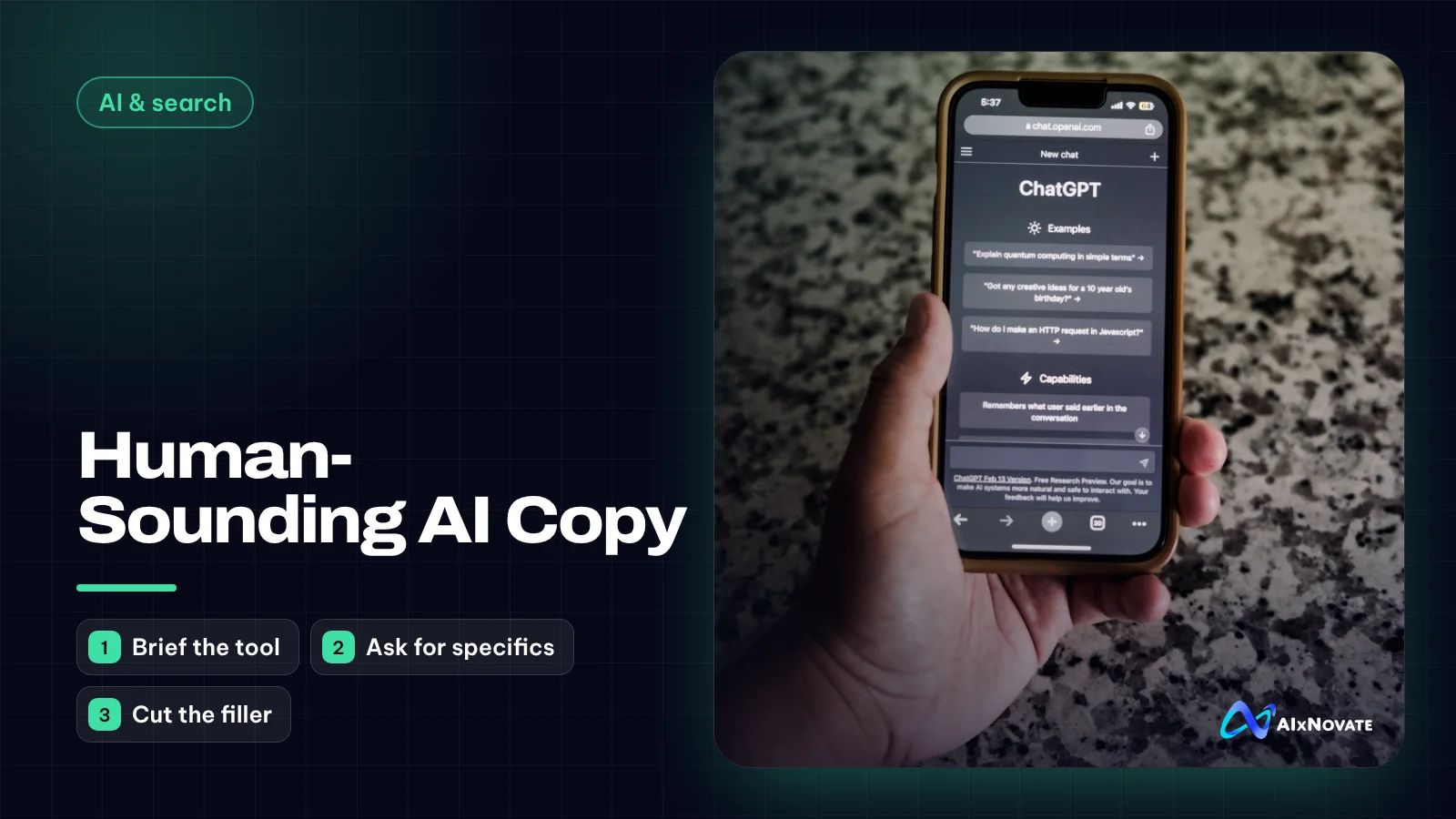
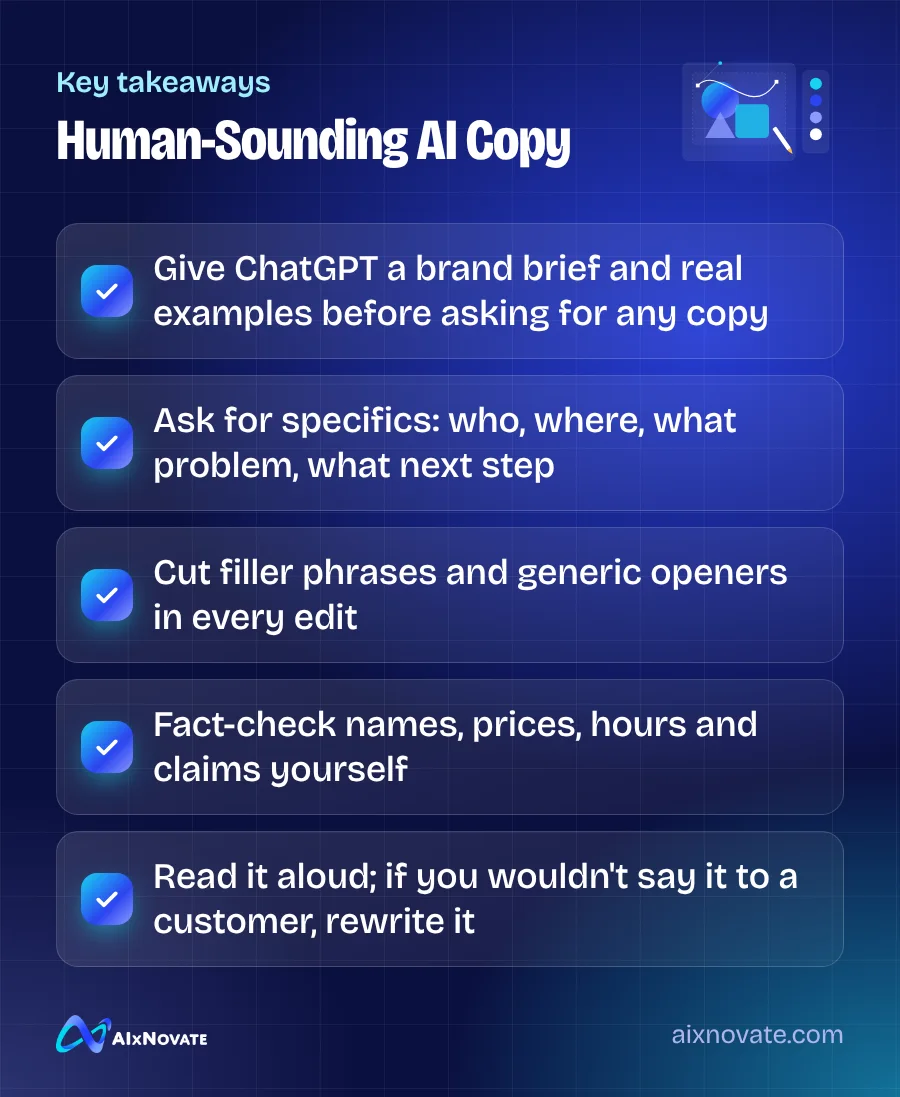
To use ChatGPT for marketing content without sounding robotic, give it your real voice before you ask for anything: a short brand brief, examples of copy you like, and specific facts about the customer and offer. Then edit hard. Cut generic phrases, add details only your business knows, and read every piece aloud before it goes out.
This is for owners and small marketing teams who already use ChatGPT or a similar assistant for posts, emails and web copy, and feel the results sound like everyone else's. The fixes below take minutes per piece once they become habit.
Why AI marketing copy sounds robotic
Language models predict likely words. Without guidance, they lean toward the most common, safest phrasing on the internet. That is why so many AI drafts start the same way, stack three adjectives in a row and end with an exclamation point.
The other cause is thin input. A prompt like "write an Instagram post for my salon" gives the tool nothing to work with except averages. The less you tell it, the more generic the result. The fix is not a magic prompt; it is better raw material.
Build a brand brief ChatGPT can follow
Write one page you can paste into every session or save in the tool's custom instructions. Keep it concrete.
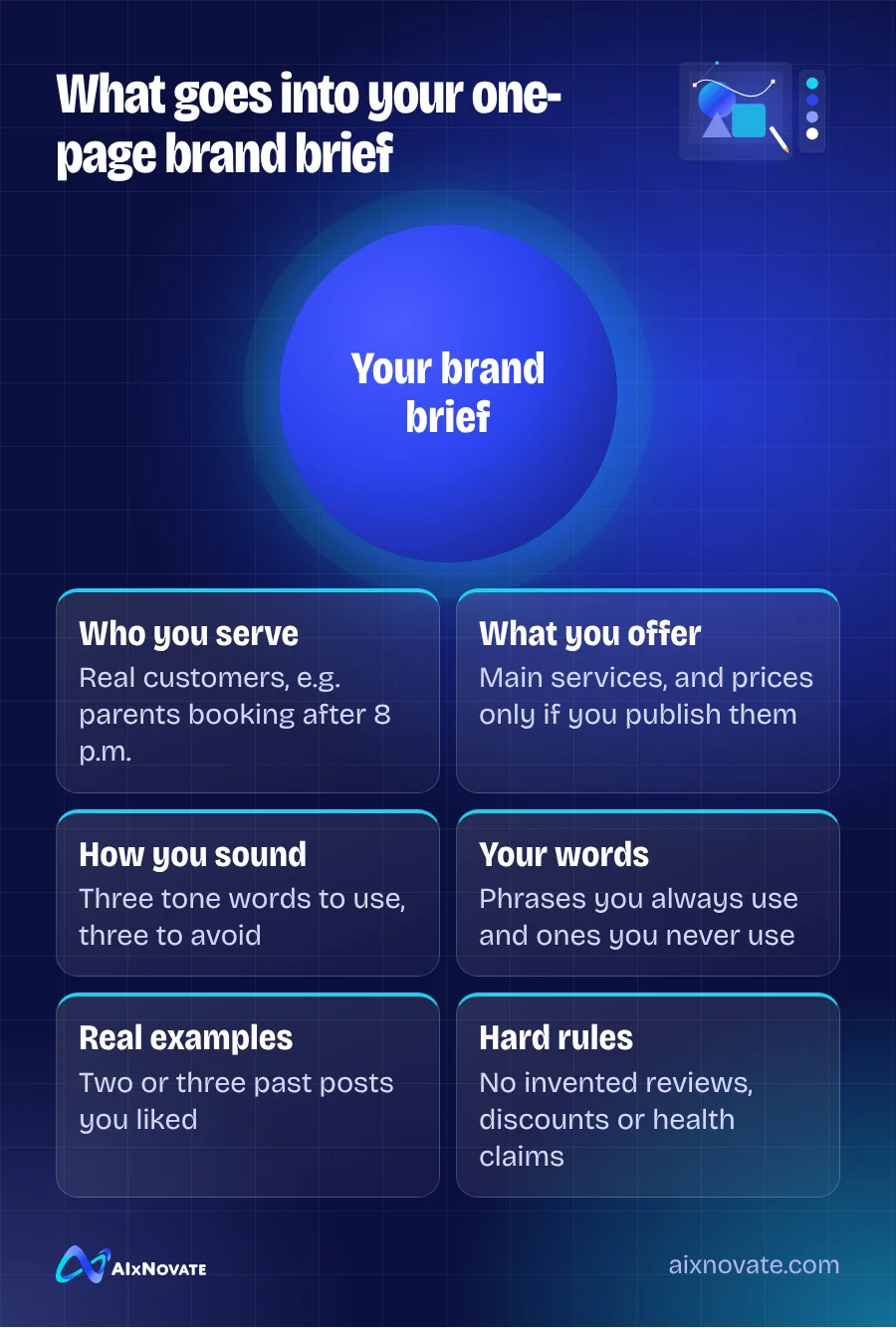
- Who you serve. "Working parents in Garden Grove and Westminster who book on their phone after 8 p.m." beats "busy customers".
- What you offer. Your main services, what is included, and prices only if you publish them.
- How you sound. Three tone words (for example: warm, direct, a little playful) and three you avoid (salesy, formal, slangy).
- Words you use and never use. Maybe you say "family-owned" and never say "luxury".
- Two or three real examples. Past posts or emails that performed well or that you simply like.
- Hard rules. No discounts unless provided, no health claims, no invented reviews, no emojis in emails, and so on.
Examples matter most. Showing the tool what good looks like works far better than describing it.
Better prompts for using ChatGPT for marketing content
A strong prompt answers the same questions a good copywriter would ask. Who is reading? What problem do they have right now? What do you want them to do next? Where will this appear?
Using the brand brief above, write a Facebook post for a Vietnamese-American family restaurant on Brookhurst Street. Audience: regulars aged 40+ who come for weekend lunch. Goal: tell them our new pho combo starts Saturday. Keep it under 80 words, friendly, no hype words, end with our phone number. Give me three versions with different openings.
Asking for several versions is useful. You can pick the best line from each instead of accepting the first draft. You can also ask the tool to critique its own draft: "Which phrases here sound generic? Rewrite them with specific details."
When the copy is for your website rather than social media, ask for structure too: a direct answer in the first paragraph, short sections and a clear call to action. That helps both readers and search engines, as explained in Google's guidance on creating helpful, people-first content.
Edit like a human: a five-minute routine
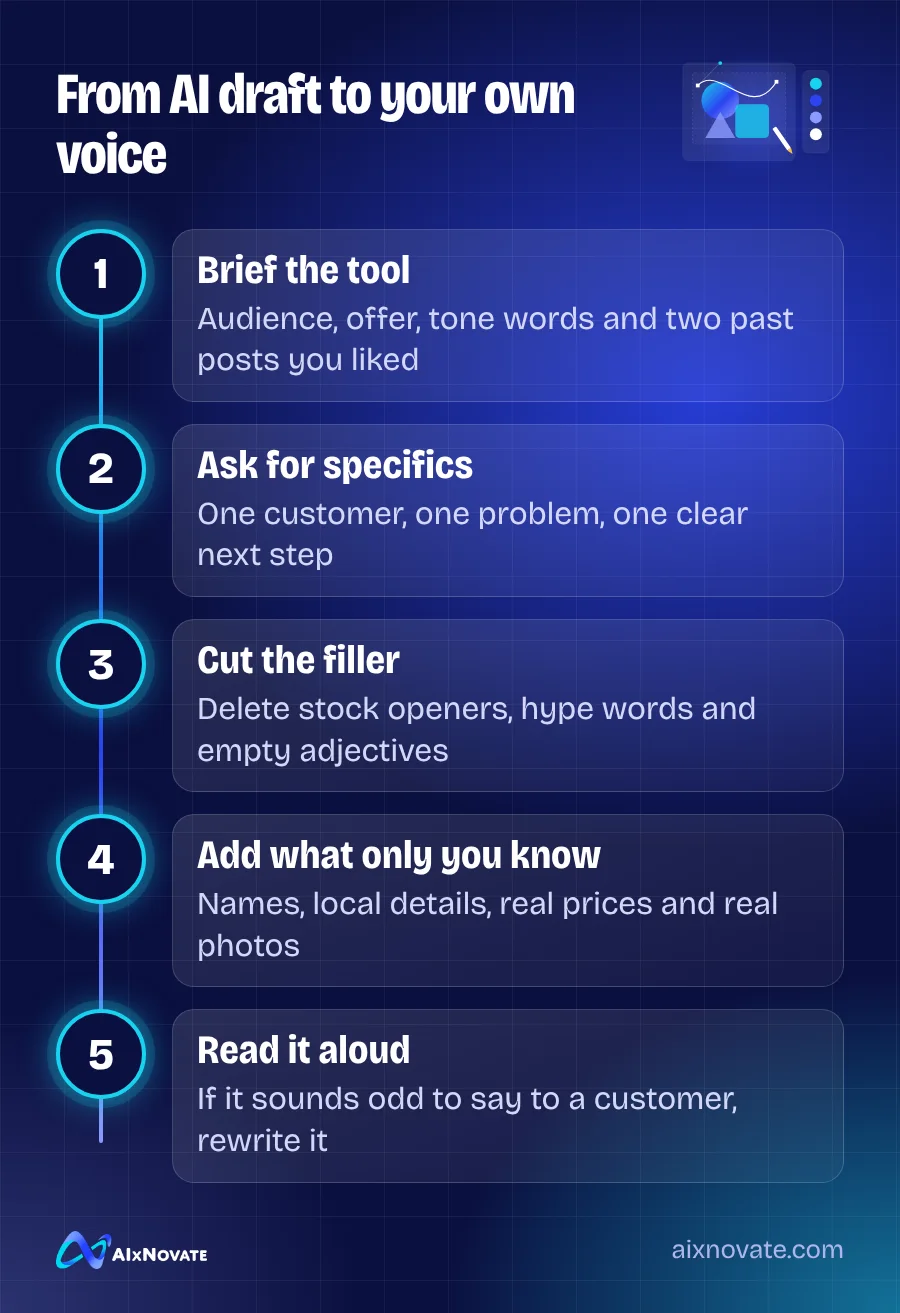
Every AI draft needs an edit. This routine catches most problems.
- Delete the opener. Many drafts start with a sentence that says nothing. Start with the news or the benefit instead.
- Cut filler words. Watch for stock phrases such as "take your experience to the next level", "look no further", "in today's fast-paced world" and strings of adjectives. Replace them with a fact.
- Add one detail only you know. The name of the stylist, the fact that the broth simmers overnight, the parking tip behind the building.
- Check every fact. Hours, prices, addresses, dates, service names, licenses. AI often fills gaps with plausible guesses.
- Read it aloud. If you would not say it to a customer at the counter, rewrite it until you would.
Brand consistency also comes from visuals. If your posts are written well but your graphics change style every week, the whole feed still feels off. A simple template set, like the ones we build in our graphic design and branding work, keeps the look as steady as the voice.
Accuracy, honesty and platform rules
Sounding human is not only about style. It is about not saying things that are untrue. Do not let AI write testimonials, invent customer stories or imply results you cannot back up. The FTC's guidance on endorsements, influencers and reviews applies whether a claim was typed by you or by a tool. This is general information, not legal advice.
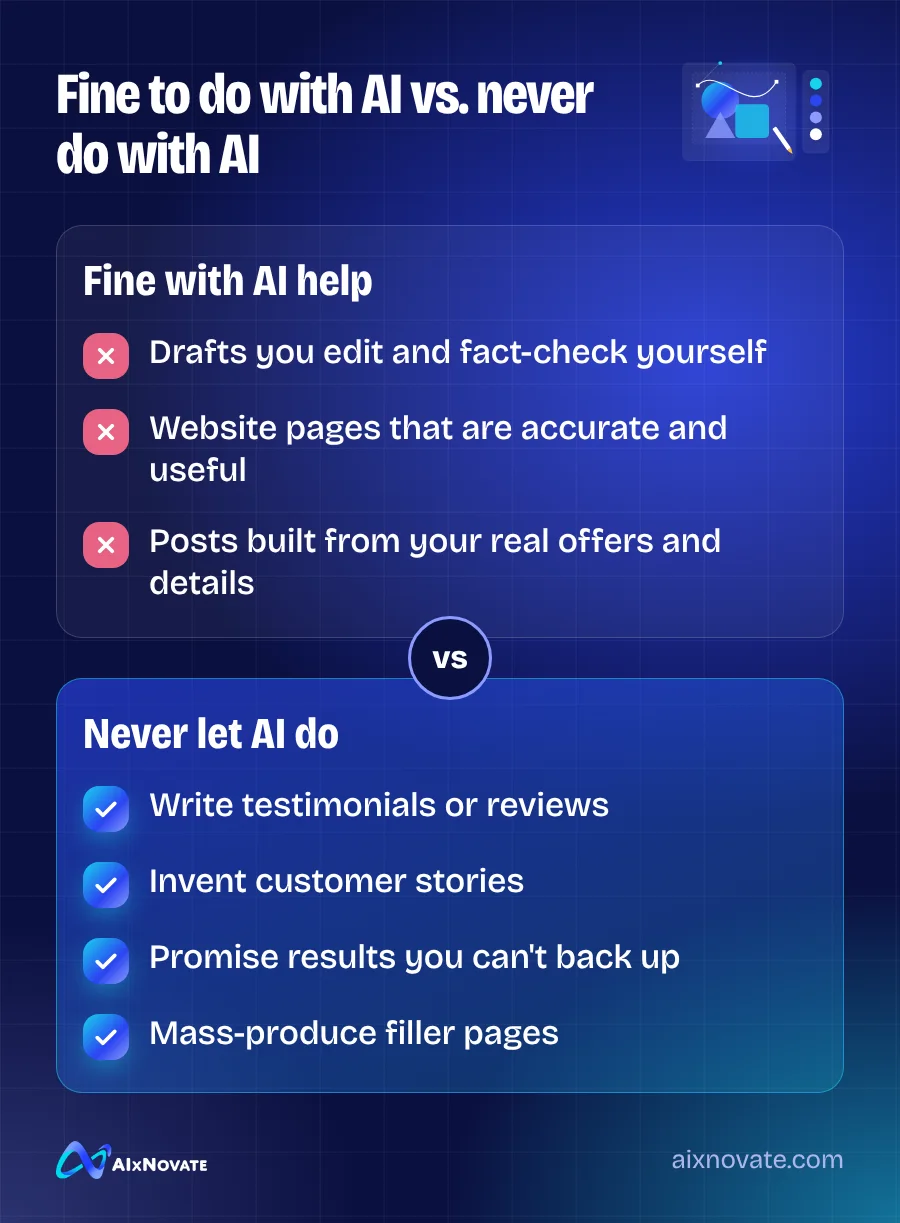
For website content, Google has said it focuses on the quality of content rather than how it was produced. Its 2023 post on Google Search and AI-generated content is worth reading once. The practical takeaway: AI-assisted pages are fine when they are accurate and genuinely useful, and risky when they are mass-produced filler.
Multilingual voice in Orange County
Many Orange County businesses speak to customers in English, Vietnamese, Spanish, Chinese or Korean. ChatGPT can draft in these languages, but tone is where it slips. It may use formal phrasing where your customers expect warmth, choose a word that sounds off to older readers, or miss how people in Little Saigon actually refer to a dish or service.
Write a separate short voice note for each language, include examples from native-speaking staff, and always have a fluent person review before posting. Our guide to translating marketing with AI explains where machine translation helps and where it does not.
A quick review checklist before you publish
- Does the first line say something specific?
- Is every fact, price and date confirmed?
- Is there at least one detail no competitor could copy?
- Are there no fake quotes, reviews or invented numbers?
- Does it match the tone of your last five good posts?
- Is the next step clear: call, book, visit, reply?
For more on avoiding the bigger traps, see common AI marketing mistakes small businesses make, and for the bigger picture, what AI marketing actually does well in 2027.
Frequently asked questions
Can customers tell when content is written by ChatGPT?
Often, yes, when the content is unedited. Generic openers, stacked adjectives, vague promises and the same rhythm in every sentence are common giveaways. Edited content that includes real names, local details and specific facts reads like your business. The goal is not to hide that you use tools; it is to make sure every post is accurate and sounds like you.
What is the best prompt for marketing copy?
There is no single best prompt. The most reliable approach is to include a brand brief, two or three examples of copy you like, the audience, the goal, the channel and a word limit, then ask for several versions. Asking the tool to point out its own generic phrases and replace them with specifics also improves results noticeably.
Should I tell customers I use AI for content?
There is no general rule requiring a label on ordinary marketing copy you have reviewed and approved, but specific platforms and ad categories may have their own disclosure rules, so check them. Honesty matters more than labels: never use AI to fake reviews, testimonials or experiences. If a customer asks, a simple answer like "we use tools to draft, and our team edits everything" is fine.
If you'd like help setting up a brand brief and review routine your team can follow, book a free consultation, or see how our digital and social media marketing team handles content day to day.