
Spending on ads but getting no phone calls? 7 reasons and how to fix them
Ads running but the phone stays quiet? Here are seven common reasons ads produce no phone calls, how to check each one, and a two-week fix plan.
When ads run but bring no phone calls, the cause is usually one of a handful of fixable gaps: the wrong people see the ad, the ad sends them to a page that does not match, the phone number is hard to tap, or calls come in when nobody answers. Check each step from click to conversation before you raise the budget or switch platforms.
This guide is for owners who are paying for Google, Meta or other ads and feel like the money disappears. It walks through seven reasons in the order you should check them, and ends with a two-week plan you can run yourself or hand to whoever manages your ads.
First, make sure calls are really missing
Before you fix anything, confirm the problem. It sounds obvious, but owners are often missing data rather than missing calls.
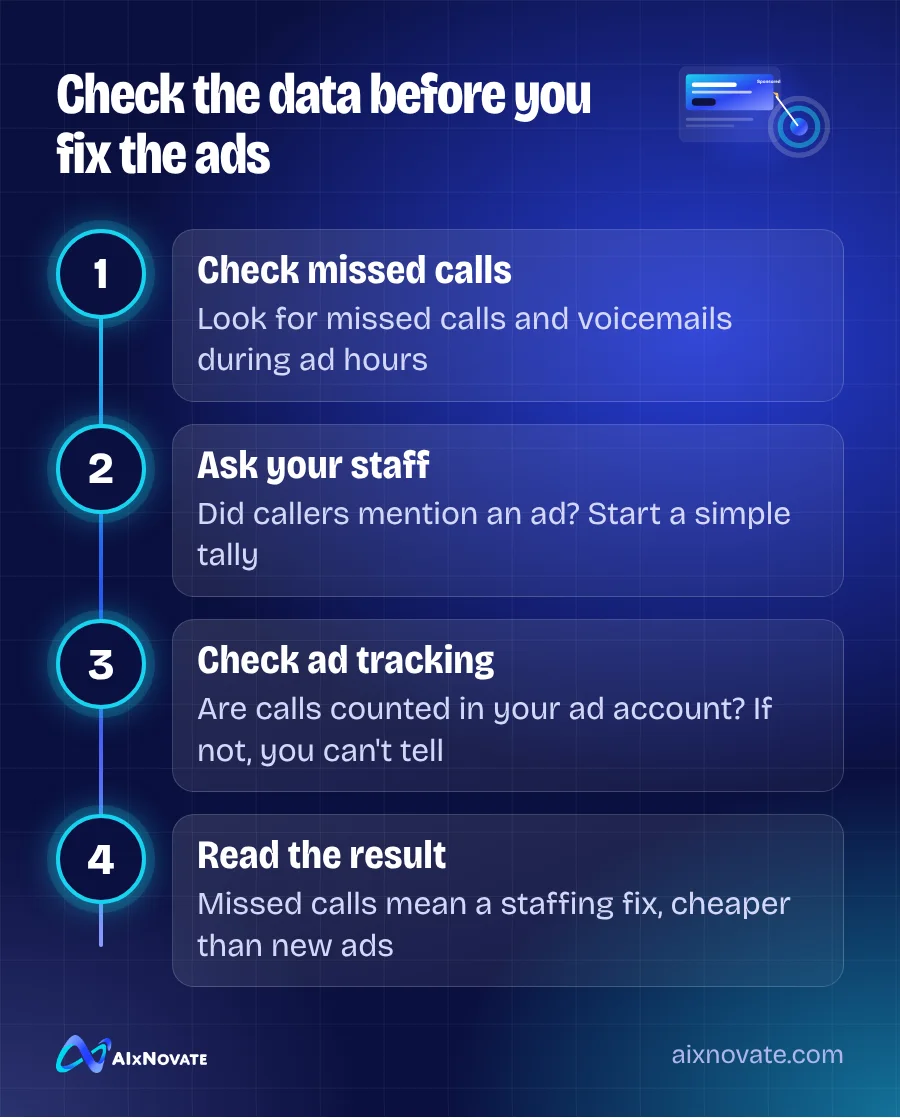
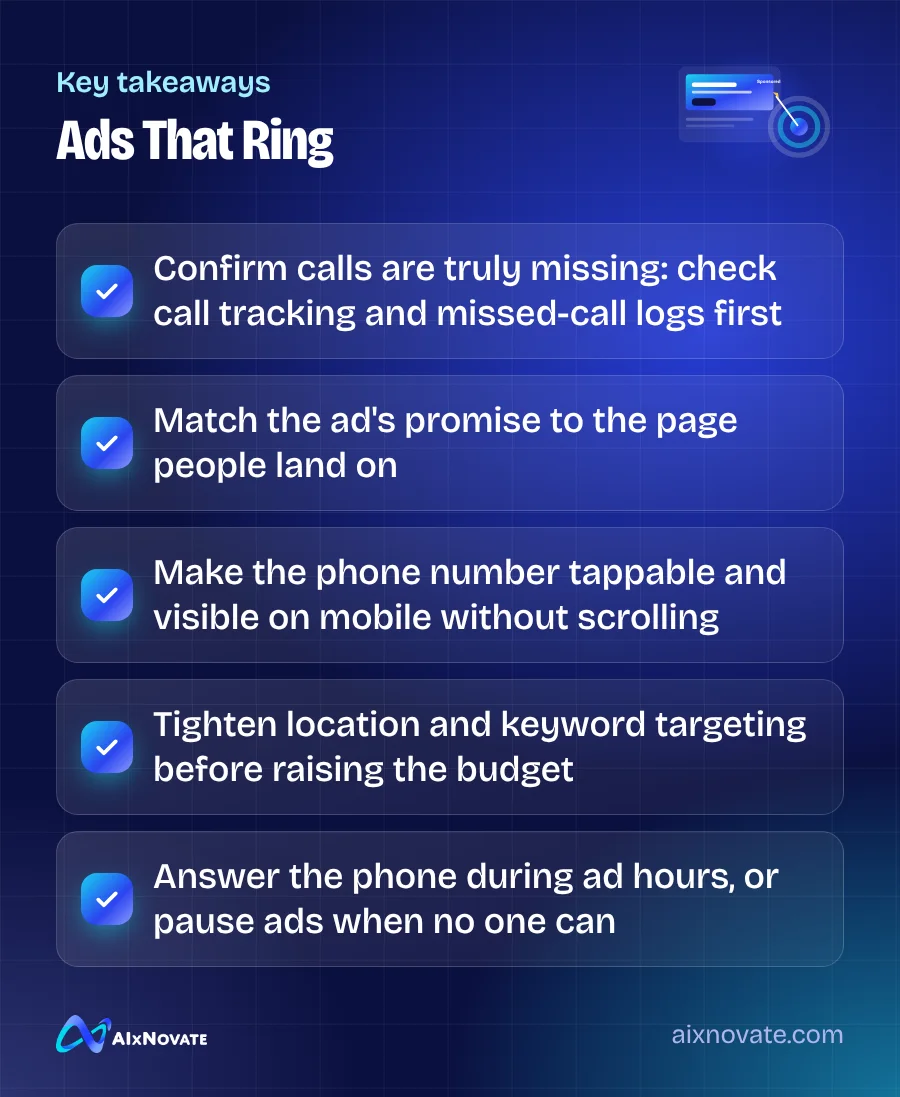
- Check your phone system or carrier for missed calls and voicemails during ad hours.
- Ask staff whether callers mentioned seeing an ad, and start a simple tally.
- Look in your ad accounts for call or call-click conversions. If none are set up, you do not yet know what the ads are doing.
If you find missed calls, the problem is staffing or call handling, not advertising. That is a cheaper fix.
Why ads bring no phone calls: 7 common reasons
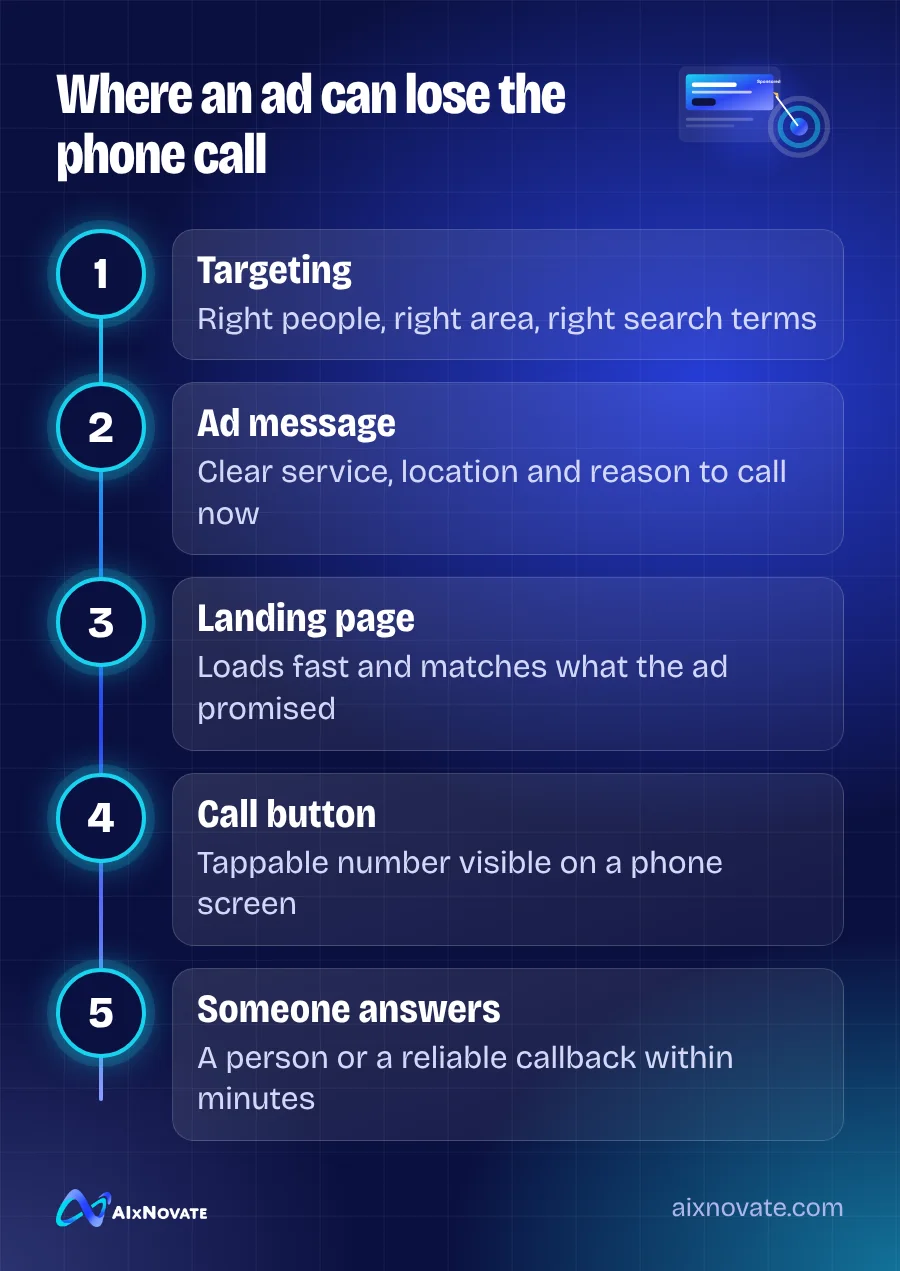
1. Targeting reaches people who will never call
Location settings that are too broad, or that include people "interested in" your area rather than in it, can spend money on viewers hours away. On search ads, broad keyword matching can show a plumbing ad to people searching for plumbing careers. Review search terms and location reports weekly and exclude what does not fit.
2. The ad does not say why to call
"Quality service you can trust" gives no reason to pick up the phone. Name the service, the area and something concrete: same-day appointments, free estimates, Vietnamese- and English-speaking staff, open Sundays. Specific beats clever.
3. The landing page breaks the promise
If the ad says "AC repair in Garden Grove" and the click lands on a generic homepage, many people leave. Send each ad group to a page about that exact service. Our article on turning website visitors into leads covers what that page needs.
4. The phone number is hard to use on mobile
Most ad clicks for local services happen on phones. The number should appear near the top, be tappable, and not be buried in an image. Test it yourself: open the page on your phone and try to call within five seconds.
5. The page is slow
A page that takes a long time to load on mobile data loses people before they see the number. Run it through PageSpeed Insights and fix the biggest issues it flags, usually oversized images and heavy scripts.
6. Campaign type does not fit the goal
Automated campaigns can work well, but they optimize for whatever goal you give them. If the goal is "clicks" or "page views," you will get clicks. Google explains how Performance Max campaigns use your conversion goals across channels; if calls are not set up as a conversion, the system cannot aim for them. Our plain-language breakdown of Performance Max and Advantage+ explains the trade-offs.
7. Nobody answers when the ads run
Ads that run at 7 p.m. while the front desk closes at 6 send callers to voicemail. Many people will not leave a message; they will call the next business. Schedule ads for hours you can answer, or set up a reliable after-hours callback process.
A two-week plan to get the phone ringing
- Days 1 to 2: Set up call tracking or call conversions in each ad platform, and make sure missed calls are logged.
- Days 3 to 4: Review search terms and location reports. Add negative keywords and narrow the radius to areas you actually serve.
- Days 5 to 7: Rewrite ad copy with a specific service, area and reason to call. Point each ad to a matching page.
- Days 8 to 10: Fix the landing page: tappable number at the top, short form, fast load, real photos.
- Days 11 to 14: Align ad schedules with staffed hours, then compare calls against the previous two weeks before changing budget.
Local notes for Orange County advertisers
For home services, consider whether Google Local Services Ads fit your trade. They are built around calls and messages, and many service categories are eligible. They are not a fit for every business, so read the requirements before you apply.
In multilingual areas like Garden Grove, Westminster and Santa Ana, language can be the hidden reason. If your ad is in English but your callers prefer Vietnamese or Spanish, test a second ad set in that language with a page and a staff member who can answer in it. Also make sure your Google Business Profile shows the same phone number as your ads; mismatched numbers confuse both people and search engines.
If the page itself is the weak link, a clear service page structure, like the ones planned in our website design projects, often does more for calls than another month of ad spend.
When more budget is the wrong answer
Raising spend on a campaign that converts poorly mostly buys more of the same result. Fix targeting, message, page and phone handling first. Once a campaign reliably produces calls at a cost you can live with, then test a higher budget in small steps.
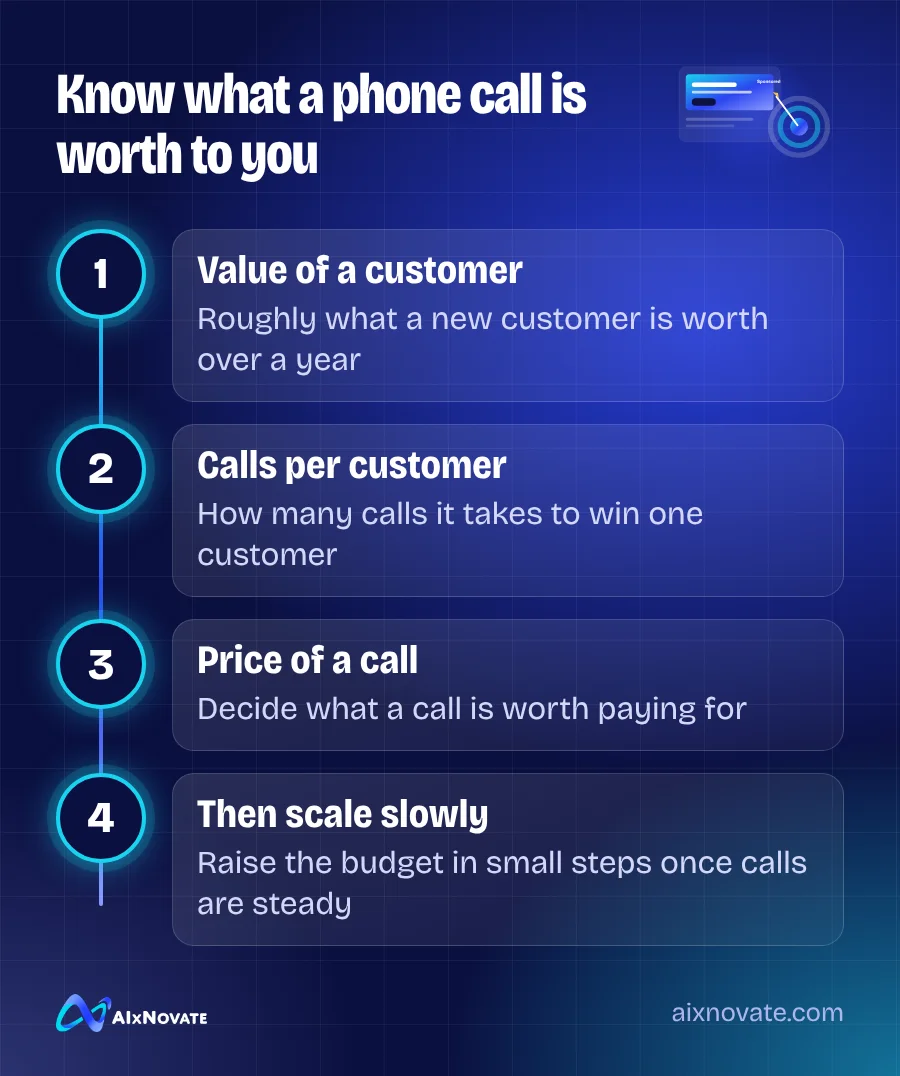
It also helps to know your numbers before you scale. Work out roughly how much a new customer is worth to you over a year, and how many calls it takes to win one. With those two figures you can decide what a call is worth paying for, instead of judging ads by gut feeling.
Frequently asked questions
How long should I wait before judging an ad campaign?
Give a new or changed campaign enough time and spend to gather real data, typically a few weeks, before major changes. Check search terms, location reports and call tracking weekly in the meantime. If you see zero calls and obviously wrong searches early on, fix those immediately rather than waiting for the full period to end.
Are Google Ads or Facebook ads better for phone calls?
Search ads tend to reach people already looking for a service, so they often suit urgent needs like repairs or appointments. Facebook and Instagram ads create demand among people who were not searching yet. Many local businesses use both, but measure each by calls and bookings rather than clicks before deciding where to put more money.
What is call tracking and do I need it?
Call tracking records which ad, keyword or page led to a call, usually through a tracking number or call conversion setting in the ad platform. Without it you are guessing. Even basic tracking inside Google Ads or Meta, plus a front-desk question about how callers heard of you, is far better than nothing.
If you want help reviewing your campaigns, you can book a free consultation with AIxNovate, or see how we run digital advertising and social media marketing for local businesses.