

Marketing feels random? Build a simple 2027 marketing plan you'll follow
If your marketing is a mix of last-minute posts and one-off ads, here is how to build a one-page 2027 marketing plan with clear goals, a calendar and a monthly check-in.

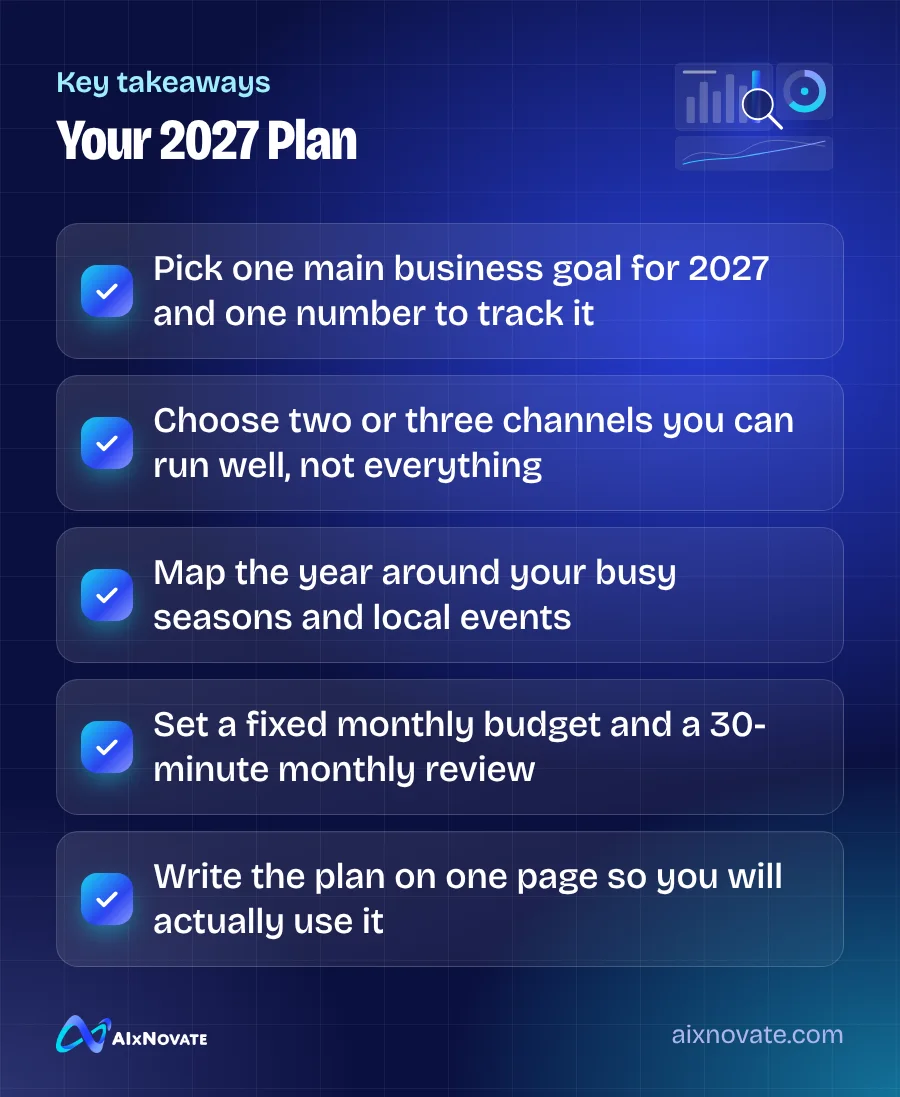
A simple 2027 marketing plan fits on one page: one main business goal with a number to track, a short description of your best customers, two or three channels you will use consistently, a 12-month calendar built around your busy seasons, a fixed budget, and a 30-minute monthly review. That is enough structure to stop marketing from feeling random.
This guide is for owners who do marketing in bursts: a flurry of posts when things are slow, an ad when a competitor opens nearby, nothing when the shop is busy. You can build this plan in an afternoon and keep it on the wall next to your schedule.
Why marketing feels random
Most owners do not lack ideas. They lack a filter. Every week brings a new suggestion: try TikTok, send a newsletter, sponsor a team, run a discount, fix the website. Without a plan, each idea gets a little attention and none gets enough to work.
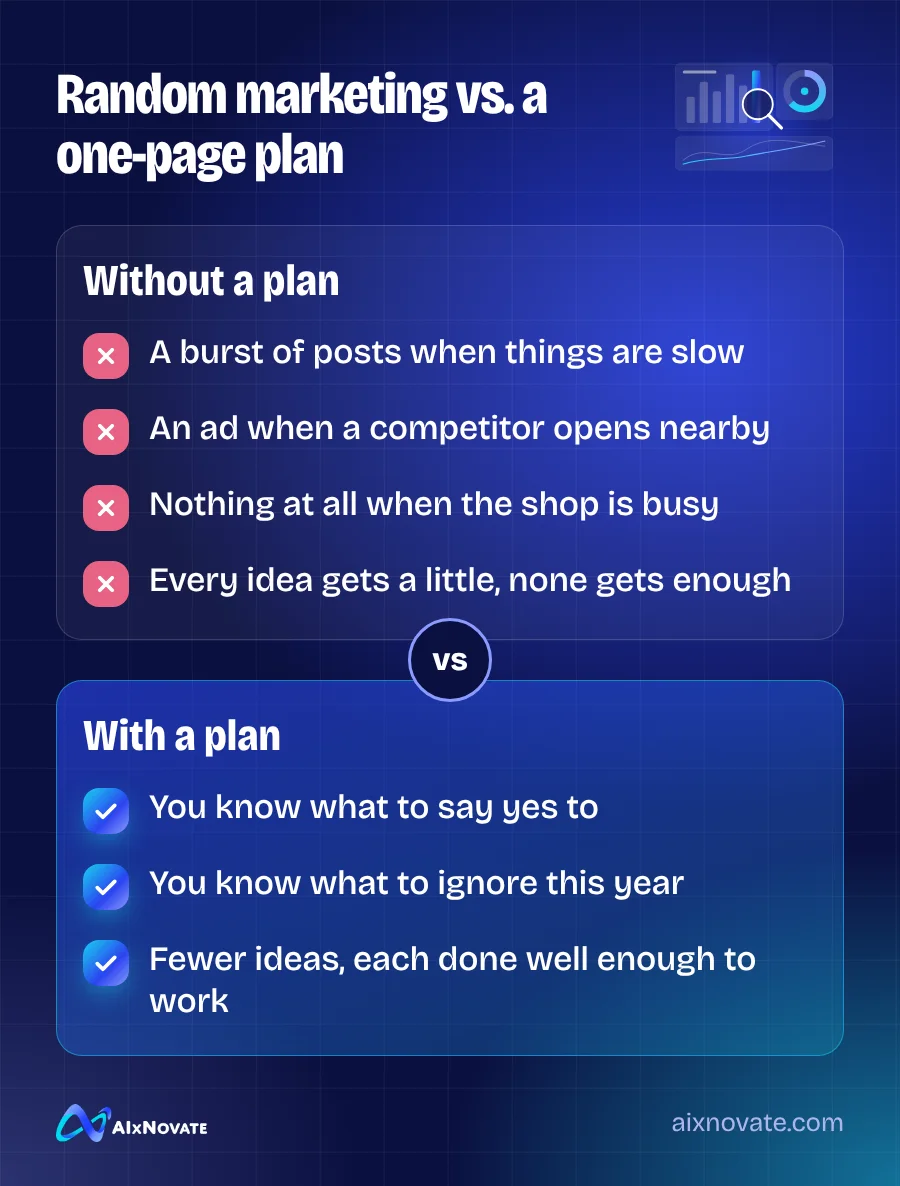
A plan is not a 40-page document. It is a short set of decisions that tell you what to say yes to and, just as important, what to ignore this year.
Start with your goal and your customers
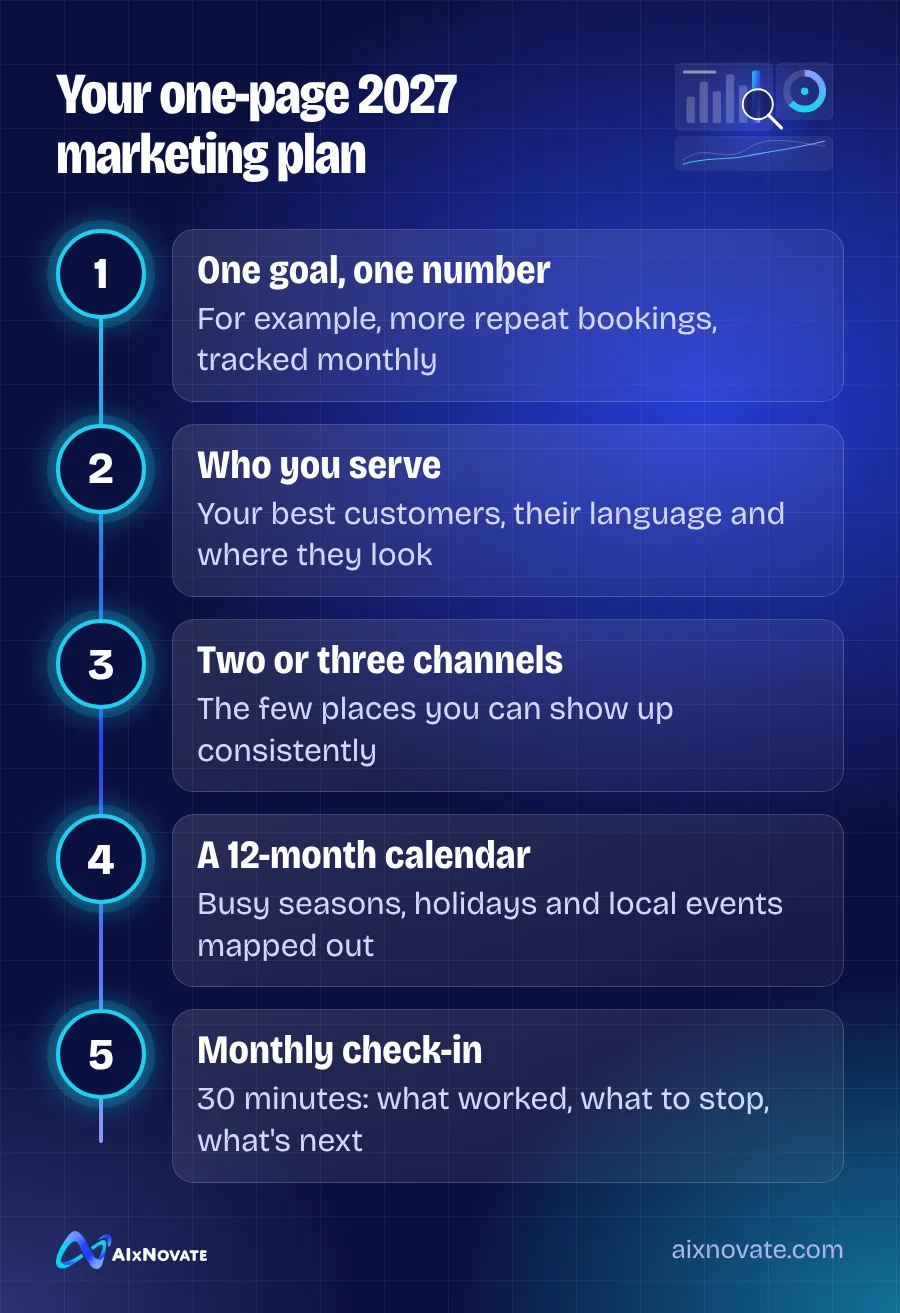
Step 1: pick one goal and one number
Choose the single business outcome that matters most in 2027. Examples:
- More first-time customers for a new location
- More repeat visits from existing customers
- More bookings on slow weekdays
- More high-value jobs, fewer small ones
Then choose one number you can check monthly: new customers, repeat bookings, calls, or average ticket. If you cannot measure it easily, pick something you can.
Step 2: describe who you serve
Write three or four sentences about your best customers. Where do they live? What language do they prefer? How do they usually find businesses like yours: Google, Facebook groups, word of mouth, walk-by traffic?
In Garden Grove, this step often changes everything. The U.S. Census Bureau reports that 67.9% of residents age 5 and older speak a language other than English at home (2019 to 2023). If your best customers prefer Vietnamese, Korean or Spanish, your plan should say so, and your channels and content should follow.
Step 3: choose two or three channels
Pick the few channels that match where your customers look and that you can keep up all year. For many local businesses, a strong core is:
- Google Business Profile and reviews, because many local searches end there.
- One social platform where your customers are most active.
- A way to reach past customers, such as email, text or a loyalty program.
Here is what that looks like for a small nail salon. Goal: more repeat bookings on weekdays, tracked by weekday appointments per month. Customers: women within a short drive, many preferring Vietnamese or Spanish. Channels: Google Business Profile and reviews, Instagram, and a text reminder for clients who opted in. Everything else, from TikTok to print ads, waits until those three run smoothly.
Add paid ads, events or print only if you have the time and budget to do them properly. Doing three things well beats doing seven things poorly.
Step 4: build your 12-month calendar
Mark your busy and slow months, then add the moments your customers care about. For Orange County businesses, that often includes:
- Tết and Lunar New Year in late January or February
- Valentine's Day, Mother's Day and graduation season
- Community events such as the Garden Grove Strawberry Festival
- Back-to-school, Mid-Autumn Festival and the holiday shopping season
Plan campaigns a few weeks before each busy period, not during it. When the rush arrives, you will be too busy to start marketing, and customers make many of their plans in advance.
For each month, write one main campaign or theme and the channels you will use. Our guide to local events marketing in Garden Grove has ideas for tying campaigns to community moments, and you can turn each month into posts with our method for planning a month of social content in one afternoon.
What to plan for in your 2027 marketing plan
You do not need forecasts to plan sensibly. A few trends are already visible and worth a line in your plan:
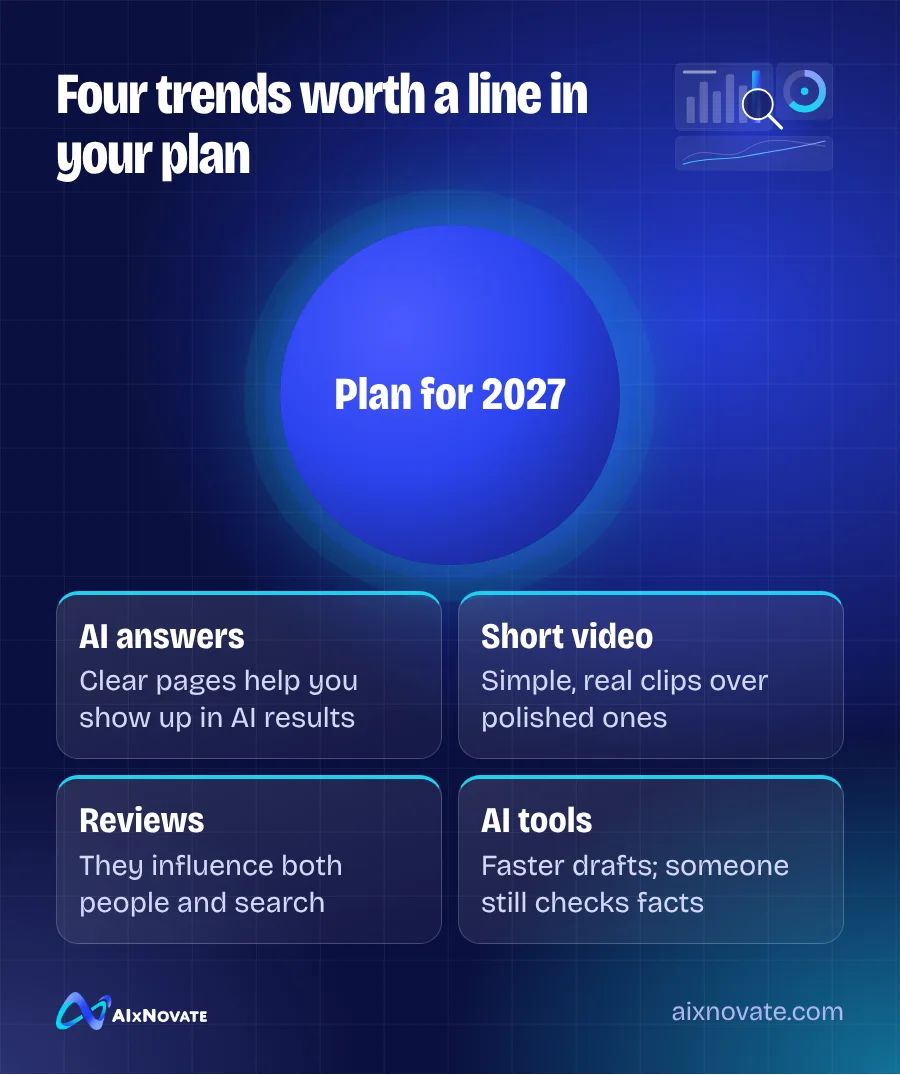
- AI answers sit next to search results. Google explains how its AI features draw on web content. Clear, accurate pages and consistent business details help you show up.
- Short video keeps growing in importance on most social platforms. Plan simple, real clips rather than polished productions.
- Reviews and reputation influence both people and search. Build review requests into your routine.
- AI tools save drafting time, but someone still needs to check facts, tone and translations.
Step 5: set a budget and a monthly check-in
Decide on a fixed monthly marketing budget you can sustain, including tools, ads, printing and any outside help. If you are unsure where to start, the SBA business guide has general guidance on marketing and planning for small businesses. If you are weighing staff against outside help, our article on the hidden costs of an in-house marketing team shows how to count the full cost.
Then put a 30-minute review on your calendar for the first week of every month. Ask three questions: Did our number move? What worked? What will we stop? Write the answers on the plan itself.
Keep the plan visible. Print it, pin it near your desk or save it as the first note on your phone. When a new idea or sales pitch arrives mid-year, check it against the page: does it serve the goal, the customers and the channels you chose? If not, write it on a "maybe next year" list and move on.
To make the weekly work manageable, pair this plan with a fixed routine like our two-hour-a-week marketing system.
Frequently asked questions
What should a small business marketing plan include?
A practical plan includes one main goal with a measurable number, a short description of your best customers, two or three chosen channels, a 12-month calendar of seasons and local events, a fixed monthly budget, and a regular review date. Keeping it to one page makes it much more likely you will use it rather than file it away.
How much should I spend on marketing in 2027?
There is no single right figure; it depends on your margins, goals, competition and growth stage. Start with an amount you can sustain every month, track what it produces, and adjust based on results. Your accountant can help you set a budget that fits your finances. Consistency usually matters more than a large one-time spend.
How often should I update my marketing plan?
Review it briefly every month and make bigger adjustments every quarter. Monthly reviews help you spot what is working and stop what is not. A quarterly look lets you shift budget or channels based on real results. Rewrite the whole plan once a year, ideally a month or two before the new year starts.
Want a team to plan and run it with you each month? See our Outsourced Marketing Team packages.
If you would like help turning your goals into a plan, you can book a free 30-minute consultation with AIxNovate or read about our market research and strategic planning work.