
AI translation for marketing: Vietnamese, Spanish and Chinese
Where AI translation works for Vietnamese, Spanish and Chinese marketing, where it fails, and a simple workflow that keeps a fluent human in the loop.
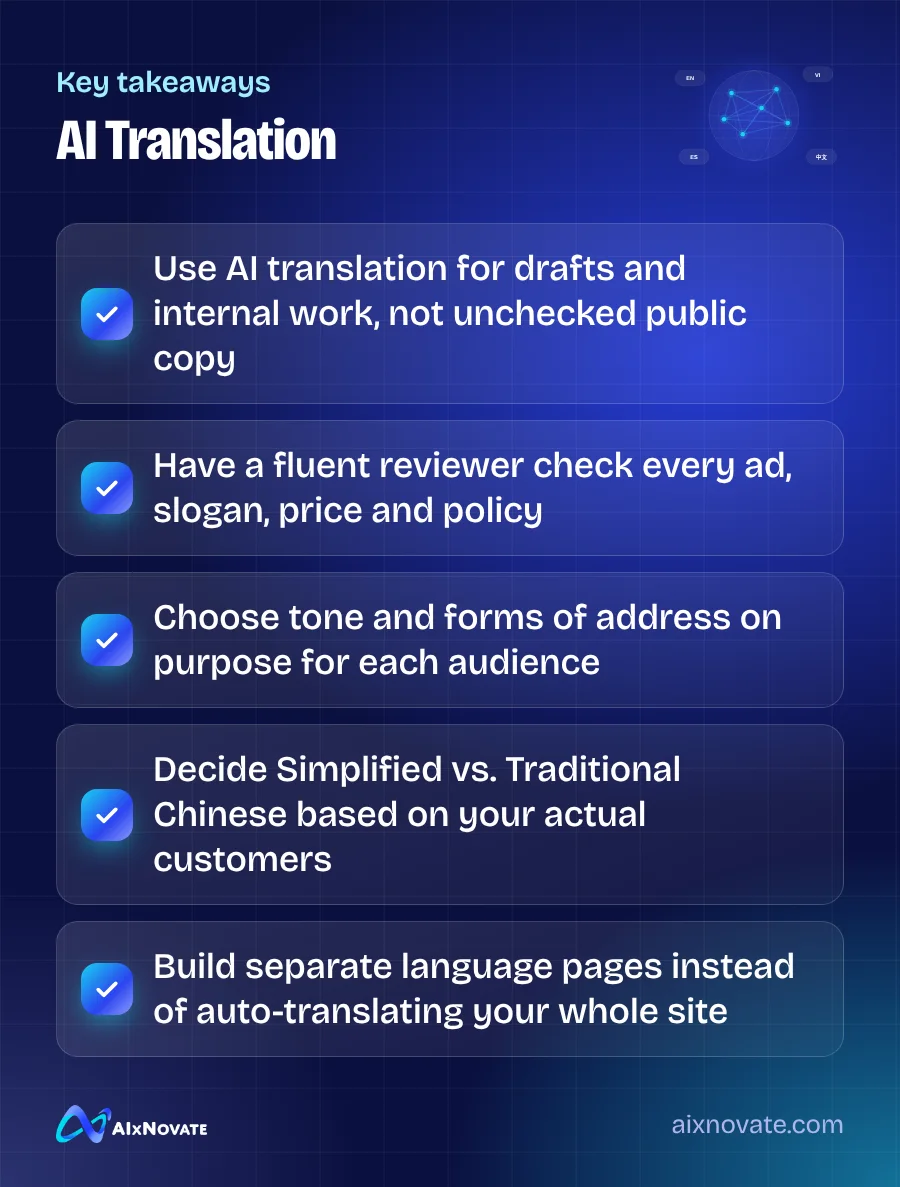
AI translation for marketing is useful for first drafts, short notices and understanding customer messages in Vietnamese, Spanish and Chinese, but it should not publish unchecked. Ads, slogans, prices, policies and anything about health or money need a fluent human reviewer who knows how your customers actually speak.
This guide is for Orange County and U.S. business owners who serve multilingual customers and want to use AI to move faster without embarrassing mistakes. It covers what goes wrong in each language, a workflow that keeps quality high, and how to handle translated pages on your website.
Why multilingual marketing matters in Orange County
In Garden Grove, 67.9% of residents age 5 and older speak a language other than English at home, and 45.3% were born outside the U.S., according to U.S. Census QuickFacts (2019–2023 estimates). Nearby Little Saigon is described by Cal State Fullerton economists as the largest Vietnamese community outside Southeast Asia, and Santa Ana, Anaheim, Irvine and Fullerton add large Spanish, Chinese and Korean-speaking communities.
For a local business, speaking a customer's language is often the difference between being considered and being skipped. That is why so many owners are excited about AI translation, and why getting it wrong is costly.
Where AI translation for marketing works well
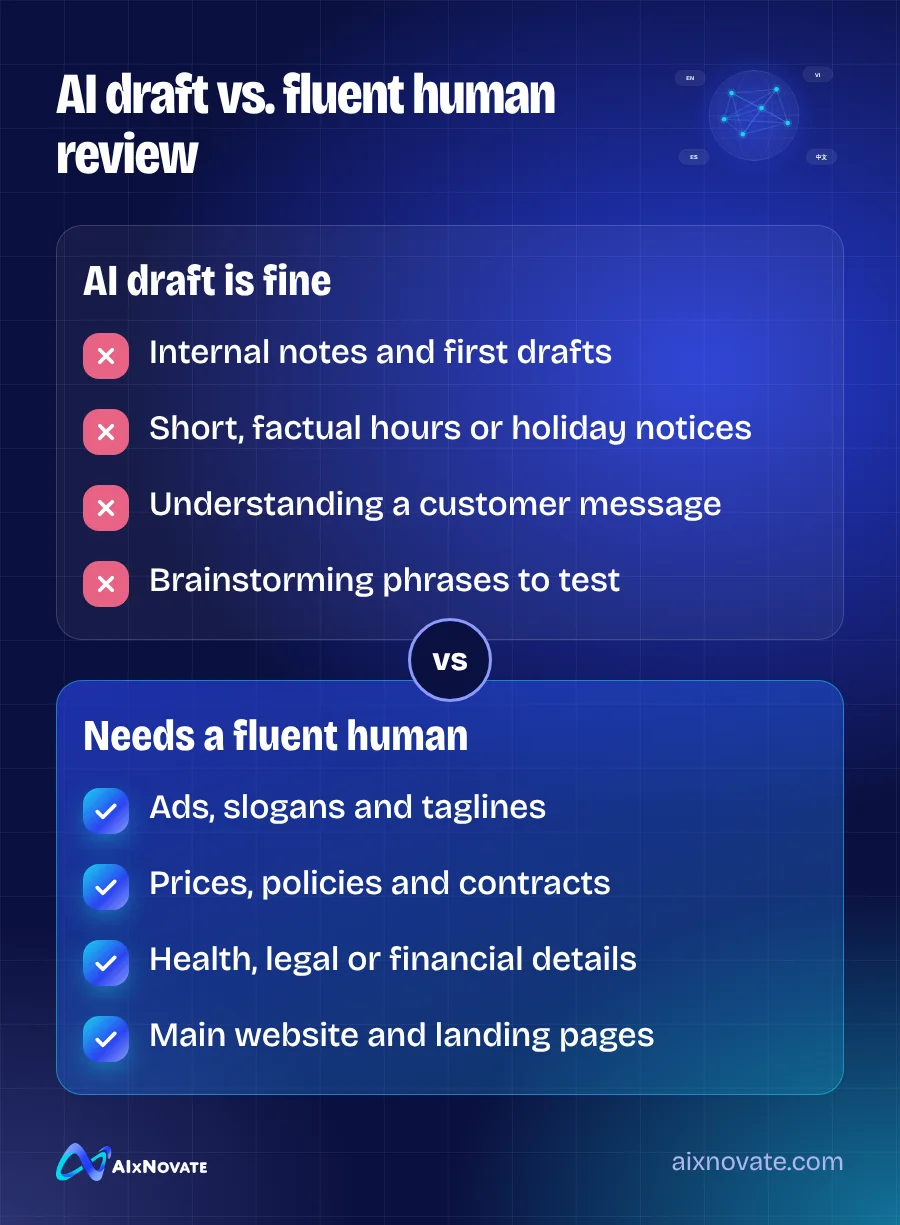
- First drafts. A machine draft gives a fluent reviewer something to edit, which is usually faster than translating from scratch.
- Short factual notices. "Closed Monday for the holiday" is low risk, though still worth a quick check.
- Understanding incoming messages. Translating a customer's DM or review so you know what they are asking.
- Consistency checks. Asking the tool whether two versions of a post say the same thing.
- Glossaries. Drafting a list of your service names in each language for your team to approve and reuse.
Where it goes wrong, language by language
Vietnamese
Vietnamese uses forms of address that reflect age and relationship, such as anh, chị, em, cô and chú. AI often picks one inconsistently or uses a stiff, formal "quý khách" tone everywhere. Your regulars may expect warmth, while a law office needs respect. Diacritics also matter: a missing or wrong tone mark can change a word's meaning entirely. Finally, vocabulary differs across generations and regions, and older customers in Little Saigon may use different terms than recent arrivals.
Spanish
Spanish varies by country and region. Food names, slang and even everyday words differ between Mexican, Central American and other audiences. You also need to choose between "tú" (informal) and "usted" (formal) and stay consistent. AI tends to produce a neutral, textbook Spanish that is understandable but can feel distant. Our guide to Spanish-language marketing in Garden Grove and Santa Ana covers tone choices in more depth.
Chinese
Written Chinese comes in Simplified and Traditional characters, and customers may strongly prefer one. Ask your customers or bilingual staff which they read rather than guessing. Spoken preferences (for example Mandarin or Cantonese) matter for video and phone, too. AI translations can be grammatically correct but sound flat or overly literal, which weakens slogans and headlines.
A simple AI-plus-human translation workflow
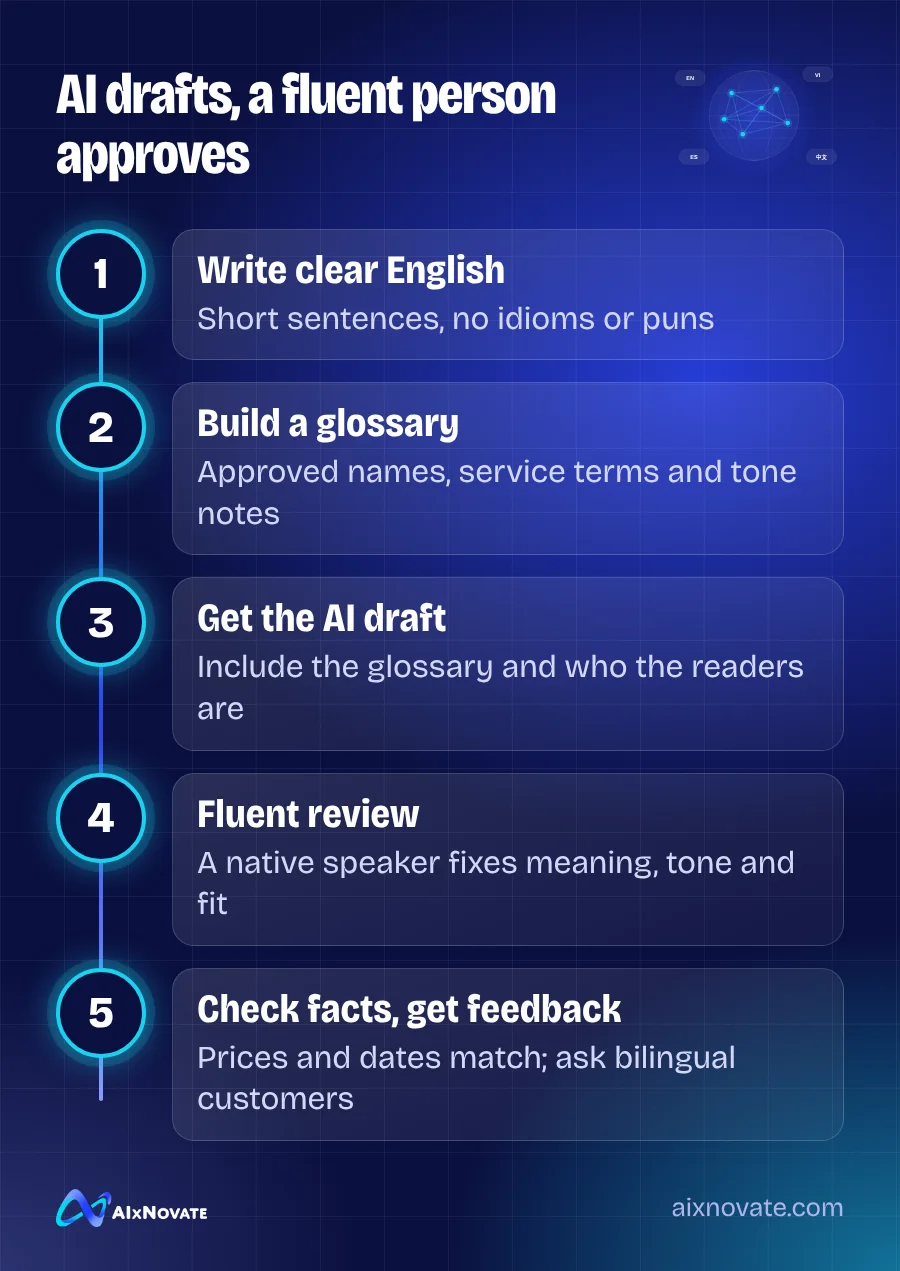
- Write clear English first. Short sentences, no idioms, no puns. Clear source copy translates far better.
- Build a glossary. Approved translations for your business name, service names and key phrases, with notes on tone and forms of address.
- Generate the AI draft with the glossary and audience notes in the prompt, for example: "Vietnamese, warm tone, readers aged 50+, address as cô chú anh chị."
- Fluent review. A native or fully fluent speaker who knows your industry edits for meaning, tone and cultural fit, not just grammar.
- Check facts last. Prices, dates, phone numbers and policies must match the English version exactly.
- Get feedback. Ask a few bilingual customers how it reads. Update the glossary with what you learn.
The same principles of clear prompts and careful editing apply in English too; see how to use ChatGPT without sounding like a robot.
Translated pages on your website
Auto-translate widgets that convert your whole website on the fly are convenient, but the quality is usually that of an unedited machine draft, and you have little control over what search engines see. A better approach for most businesses is to create separate, reviewed pages for each language that matters, starting with your homepage, main services and contact page.
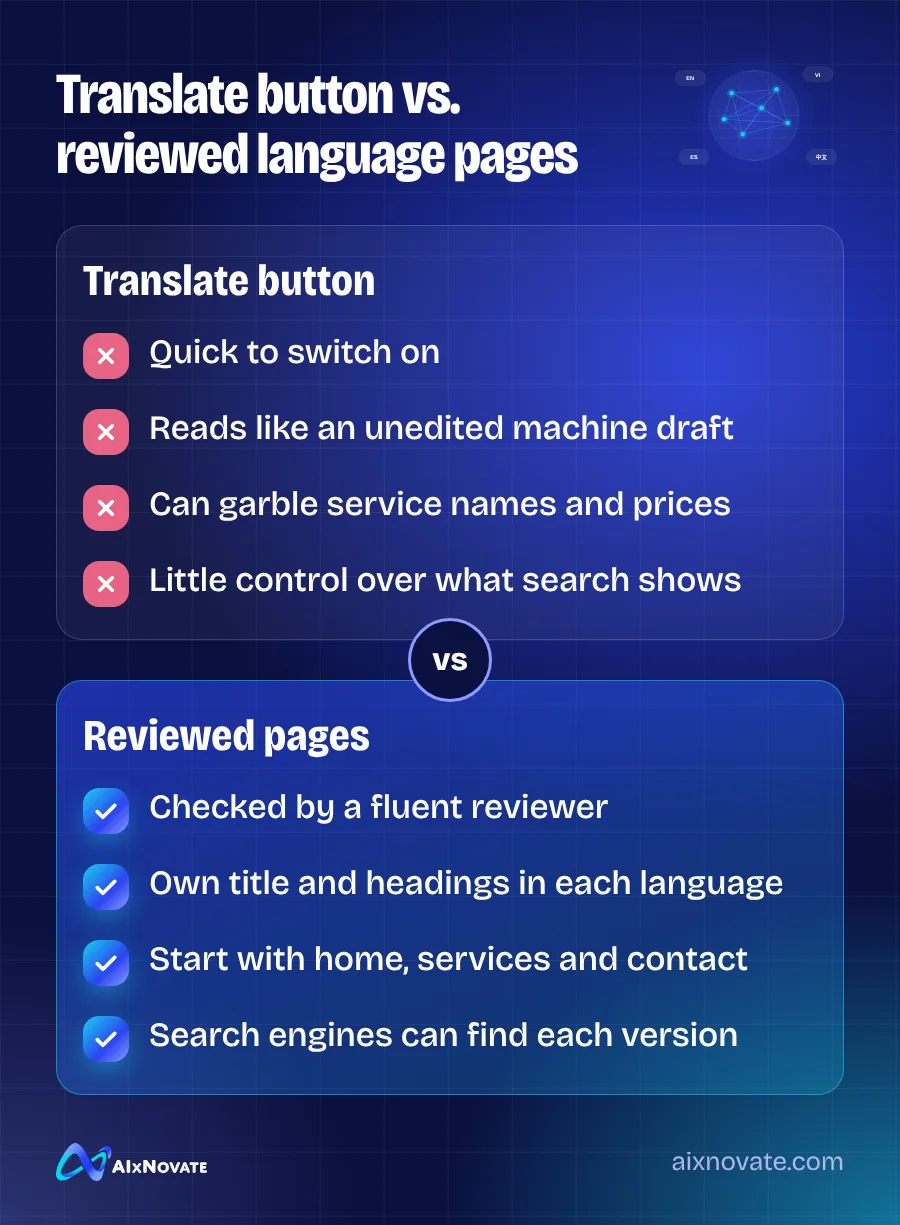
Google explains how to tell search engines about language versions in its guide to localized versions and hreflang. Each language page should have its own title, description and headings written for how people search in that language. Planning language versions from the start is much easier than retrofitting them, which is why it is a standard part of our website design projects for multilingual businesses.
When you definitely need a human
- Ads and slogans, where tone and wordplay decide whether people stop scrolling.
- Medical, legal, insurance, immigration or financial information.
- Contracts, terms, cancellation policies and warranties.
- Anything printed: signs, menus, flyers and packaging are expensive to fix.
- Responses to complaints, where a clumsy phrase can make things worse.
For a deeper look at running two languages side by side, read our guide to bilingual Vietnamese-English marketing in Garden Grove. Our earlier article on how AI learns languages explains why models are stronger in some languages than others.
Frequently asked questions
Is AI translation good enough for Vietnamese marketing?
It is good enough for a first draft, not for publishing unchecked. AI often gets forms of address, tone and diacritics wrong, and it may choose words that sound unnatural to older Vietnamese-American customers. Use it to speed up a fluent reviewer's work. For ads, signs and anything about prices or health, a native speaker should always approve the final text.
Should I use Simplified or Traditional Chinese?
It depends on your customers. Different Chinese-speaking communities read different scripts, and preferences can be strong. Ask bilingual staff and regular customers, look at which script your competitors' Chinese-speaking customers respond to, and choose one consistently. If your audience is truly mixed, you may need both versions for key materials such as menus and service pages.
Can I just add a translate button to my website?
You can, and it is better than nothing for basic understanding. But automatic translation is usually unreviewed, can mistranslate service names and prices, and gives you little control over how pages appear in search. For languages that drive real business, build reviewed language pages for your most important content and keep the widget, if at all, as a backup.
If you want help setting up a translation workflow or multilingual pages, book a free 30-minute consultation. We work in English, Vietnamese and Chinese and create content in Spanish, and our SEO and answer engine optimization work covers multilingual search too.