
Customers come once and never come back: retention marketing for local businesses
New customers try you once and disappear? Here is how to find out why, and a simple retention marketing system to bring them back for a second and third visit.
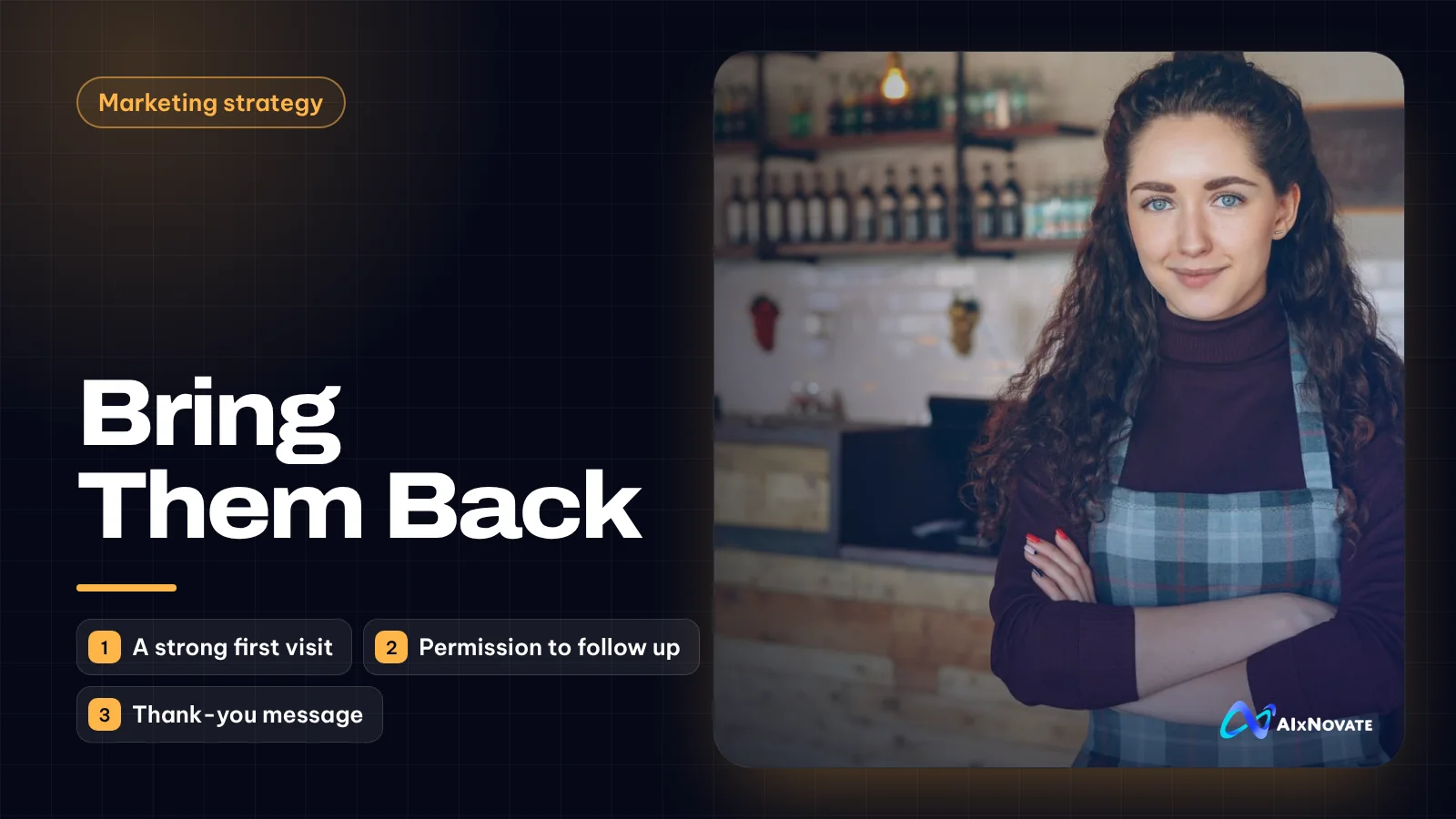
Retention marketing is the work of bringing first-time customers back. For most local businesses it comes down to three things: a first visit good enough to repeat, permission to stay in touch, and a well-timed reminder or reason to return. Before spending more on new customers, find out why existing ones do not come back and fix the simplest gaps first.
This guide is for restaurants, salons, spas, clinics, auto shops and retailers who see plenty of new faces but few familiar ones. It gives you an honest diagnosis, a simple follow-up system, and ways to measure whether it works.
"They seemed happy, so why didn't they come back?"
Few things are more discouraging than a customer who smiles, pays, maybe even leaves a nice review, and is never seen again. It is tempting to blame price or loyalty, or to run another discount to attract new people.
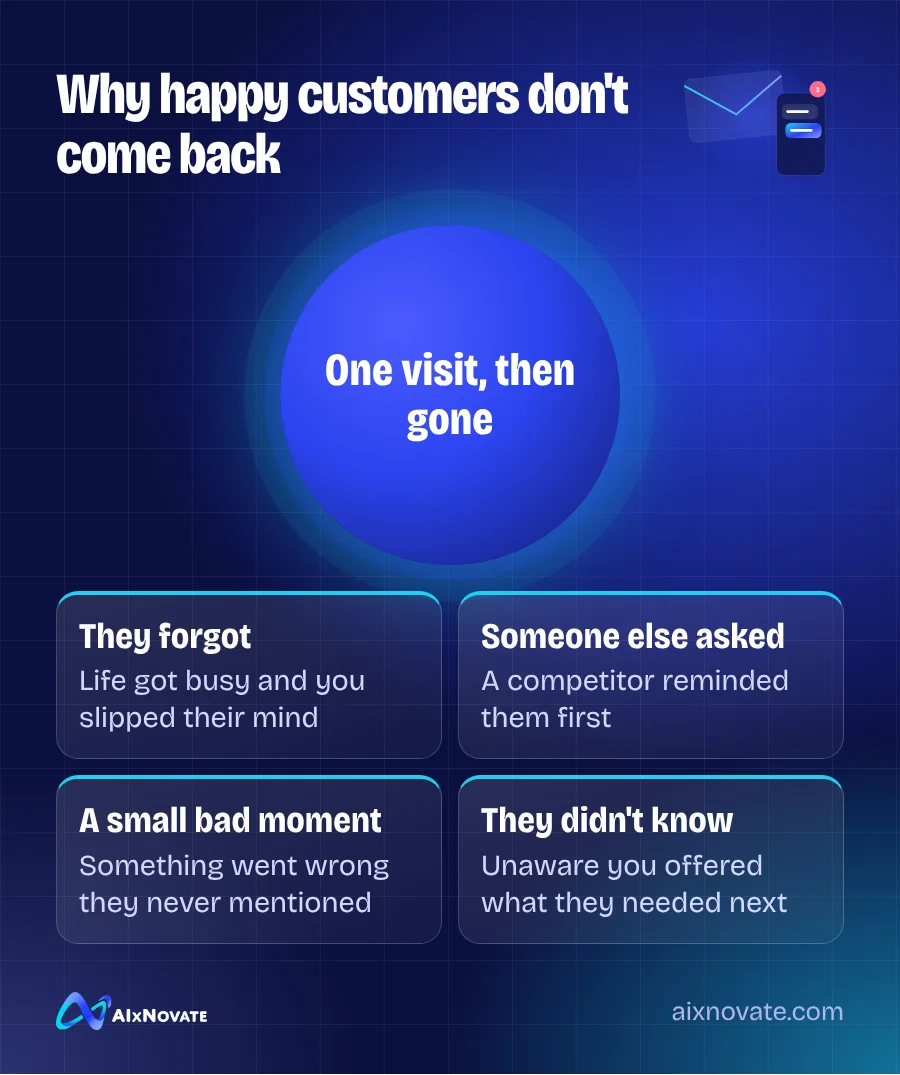
Usually the reasons are more ordinary. People forget. A competitor reminded them first. They had a small bad moment they never mentioned. Or they simply did not know you offered the other thing they needed.
Diagnose why customers don't return
Do not guess. Spend two weeks collecting real answers:
- Ask regulars what made them come back the second time.
- Reach out to a handful of one-time customers with a short, polite message asking how their visit was.
- Read your reviews, including the three- and four-star ones, for repeated small complaints such as wait time, parking or a rushed service.
- Ask staff what customers mention at checkout.
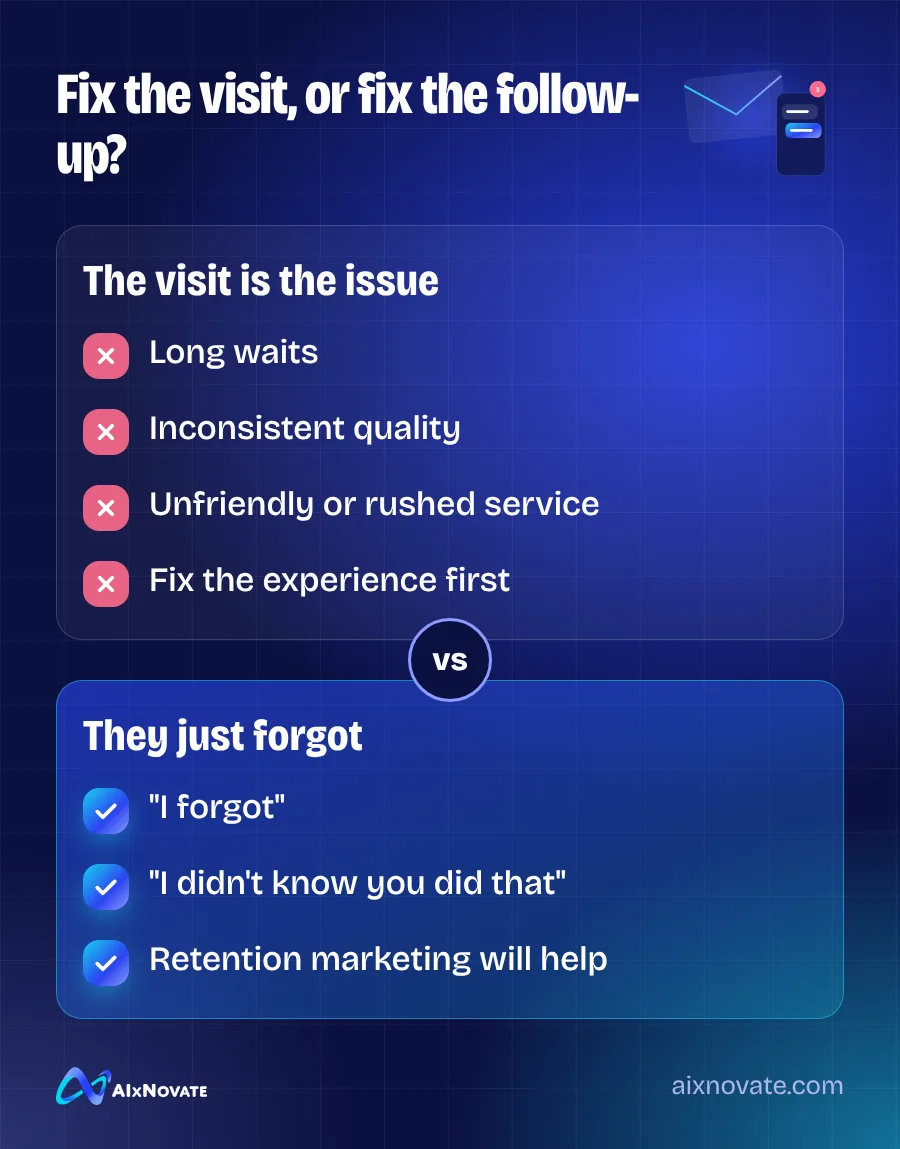
If the answers point to the experience itself, such as long waits, inconsistent quality or unfriendly service, fix that first. No marketing can outrun a disappointing visit. If the answers are "I forgot" or "I didn't know you did that," retention marketing will help.
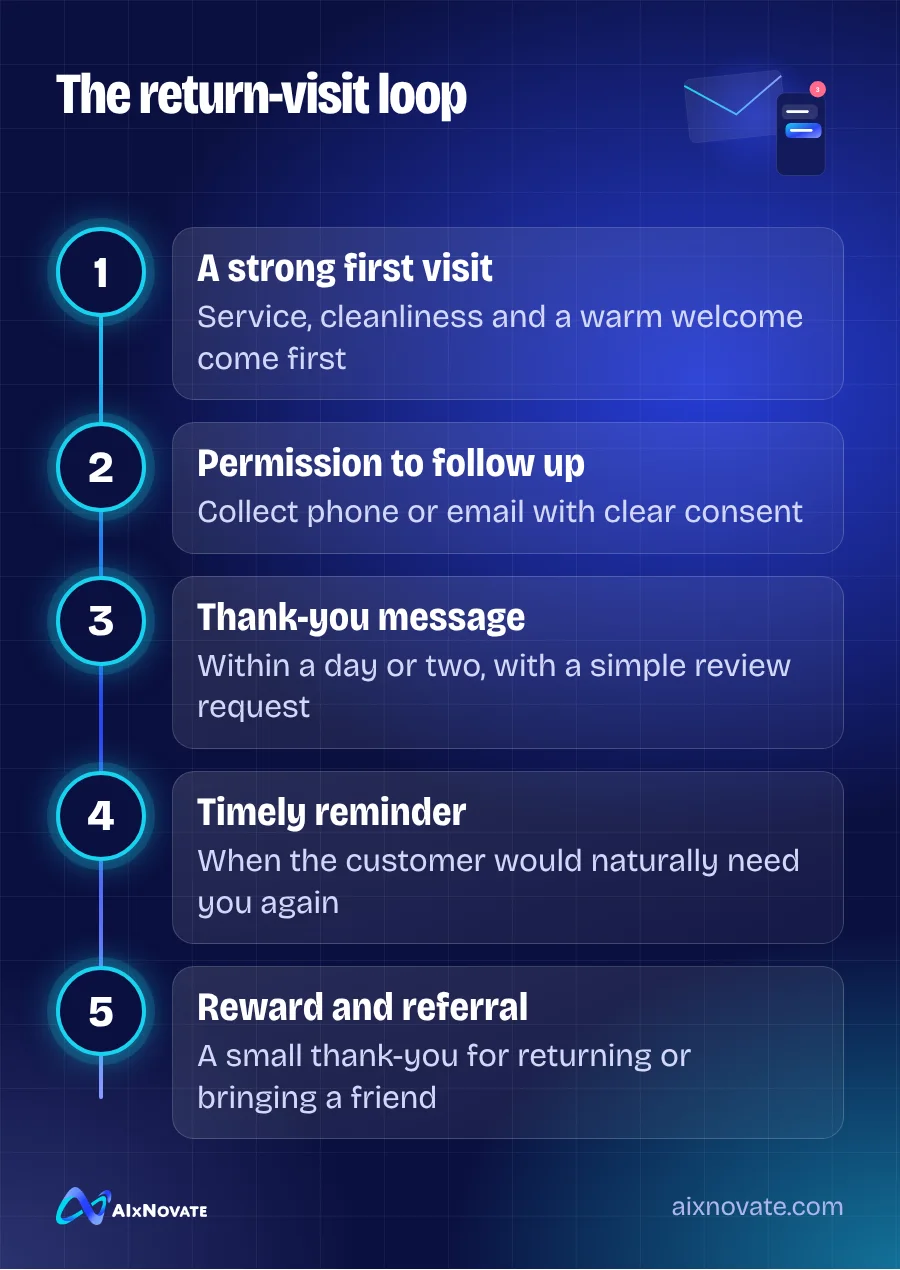
Build a simple retention marketing system
- Capture contact details with permission. At booking or checkout, ask for a phone number or email and explain what you will send. Keep a simple record of who agreed.
- Send a thank-you. Within a day or two, send a short note thanking them, with a link to leave a review if they wish.
- Time a reminder to the natural cycle. A nail salon might remind clients a few weeks later; a dental office or auto shop at the next service interval; a restaurant before a holiday or with a new seasonal menu.
- Introduce what else you offer. Many one-time customers do not know your full menu of services. One short message can fix that.
- Reward loyalty and referrals. A punch card, a birthday treat or a small thank-you for referring a friend. Keep it simple enough for staff to explain in one sentence.
Keep the messages short and human. A thank-you might read: "Thanks for visiting us this week. We hope you loved your pedicure. If you have a minute, we'd appreciate your honest feedback." A reminder might say: "It's been about three weeks since your last visit. Want us to save your usual Saturday spot?" Plain words in the customer's language beat a polished promotion.
Assign one person to own the follow-up each week, so it does not depend on whoever remembers.
Physical touches still work well. A printed card in the bag, a loyalty stamp card or a handwritten note can feel more personal than another text. These are the kinds of pieces we design in our traditional and print marketing work, and they pair well with digital follow-up.
Stay on the right side of privacy and review rules
Retention marketing uses customer data, so handle it with care. This is general information, not legal advice:
- Get clear consent before sending marketing texts or emails, and make it easy to opt out.
- California's privacy law gives consumers rights over their personal information. The California Attorney General's CCPA page explains who the law applies to and what it requires.
- If you reward customers for reviews, be careful. The FTC guidance on endorsements and reviews explains rules on incentives and fake or selective reviews. Platforms like Google also have their own policies.
When in doubt, ask for feedback from everyone, never only from happy customers, and never make a reward depend on a positive review.
Retention marketing for Garden Grove and Orange County businesses
In close-knit communities like Little Saigon, word of mouth travels fast, in both directions. Returning customers often bring family and friends, so retention and referrals are closely linked.
- Use the customer's language. Send reminders in Vietnamese, Spanish, Korean or English based on what the customer prefers.
- Follow the cultural calendar. Tết, Mid-Autumn Festival, Mother's Day and graduation season are natural reasons to reach out.
- Recognize regulars. Remembering a name or a usual order is retention marketing, too.
For industry-specific ideas, see our guides to restaurant marketing in Garden Grove and nail salon and spa marketing. Reviews from returning customers also help new ones choose you; our article on getting more Google reviews covers the process.
Measure whether it works
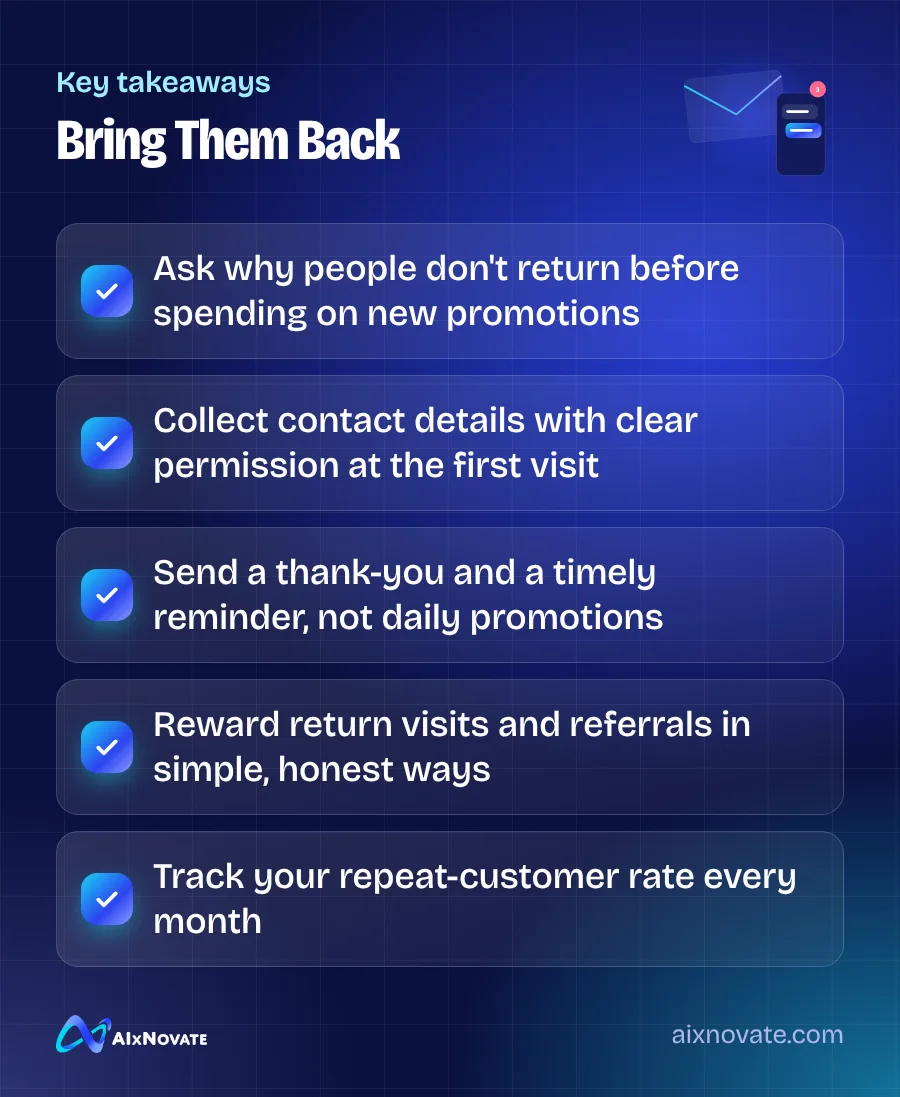
Track one number every month: the share of customers who came back at least once within a period that fits your business. Your booking or point-of-sale system may report it; if not, a monthly count of returning names works. Also note how many referrals you received. If both rise after you start following up, the system is working.
Watch the warning signs, too. A jump in unsubscribes or "please stop" replies means messages are too frequent or not useful enough. Few replies and no bookings may mean the timing is off. Adjust one thing at a time, such as the day you send, the wording or the offer, and compare the next month with the last.
Frequently asked questions
What is retention marketing?
Retention marketing is everything a business does to bring existing customers back: follow-up messages, reminders, loyalty rewards, referral programs and a consistently good experience. For local businesses it is often more affordable than finding new customers, because these people already know where you are and what you offer. It works best when the first visit was genuinely good.
How often should I message past customers?
Match the timing to how often customers naturally need you. A salon might send a reminder every few weeks, a restaurant once or twice a month, and an auto shop or clinic at service intervals. Every message should be useful, such as a reminder, a new offer or seasonal news. Too many messages lead people to unsubscribe.
Can I give customers a discount for leaving a review?
Be very careful. FTC guidance and platform policies restrict incentives tied to reviews, and offering rewards only for positive reviews can mislead consumers. A safer approach is to ask every customer for honest feedback without any reward attached. This is general information, not legal advice, so check the official guidance and each platform's rules.
If you would like help setting up a follow-up system, you can book a free consultation with AIxNovate or learn how we handle email, social and digital marketing for local businesses.