
Spanish-language marketing in Garden Grove and Santa Ana
How to reach Spanish-speaking customers in Garden Grove and Santa Ana: choosing channels, writing natural Spanish, building Spanish web pages and running ads.

Spanish-language marketing in Garden Grove and Santa Ana means presenting your business in natural, local Spanish on the channels Spanish-speaking customers use, and making sure they can call, book or buy in Spanish once they find you. The most important step is often operational: having someone who can answer the phone and messages in Spanish.
This guide is for business owners in central Orange County who serve, or want to serve, Spanish-speaking customers. It applies to clinics, legal and tax services, auto shops, contractors, restaurants, retailers and many other local businesses.
Why Spanish-language marketing matters in Garden Grove and Santa Ana
In Garden Grove, 37.6% of residents identify as Hispanic or Latino, and 67.9% of residents age 5 and older speak a language other than English at home (2019–2023), according to U.S. Census QuickFacts. Neighboring Santa Ana shares many of the same customers, and plenty of households move between the two cities for work, school and shopping.
Many Spanish speakers in the area are bilingual and comfortable in English. Others, often older relatives or recent arrivals, strongly prefer Spanish, especially for health, legal, financial or home-repair decisions where precision matters. Marketing in Spanish signals that they will be understood.
Start with readiness, not ads
Spanish ads that lead to an English-only phone line waste money and damage trust. Before launching anything public, check:
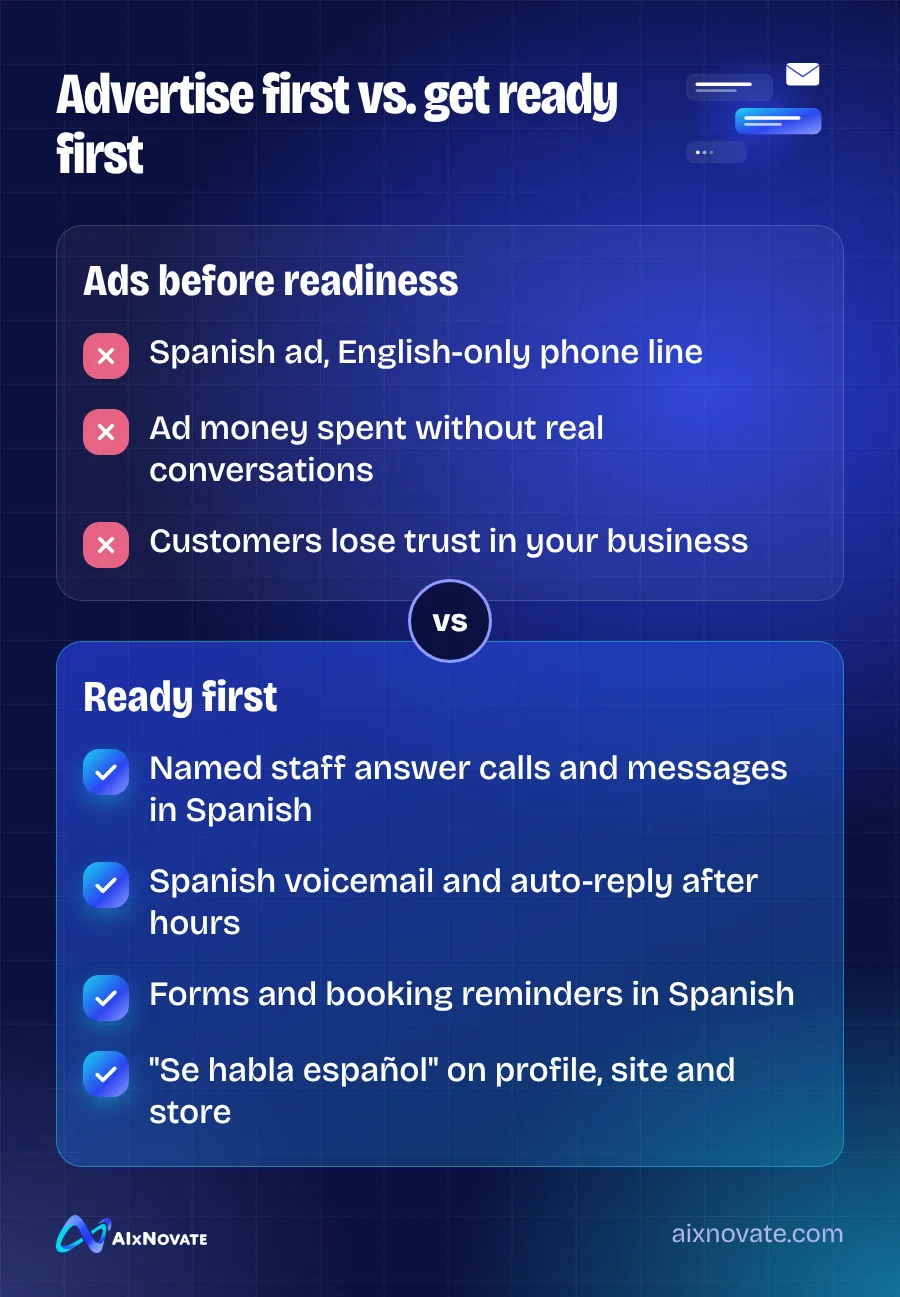
- Who answers in Spanish? Name the staff members who can handle calls, walk-ins and messages, and when they work.
- What happens after hours? Record a Spanish voicemail greeting and set up an auto-reply for messages in Spanish.
- Are forms and documents available in Spanish? Intake forms, estimates, receipts and policies may need translation.
- Is your booking system bilingual? Confirmations and reminders should arrive in the customer's language if possible.
- Can staff explain prices and terms clearly? A short glossary of your common terms helps everyone use the same words.
Once this is in place, add "Se habla español" to your Google profile description, website header, storefront and social bios.
Write Spanish that sounds local
Spanish varies by country and region. Many Spanish speakers in Southern California have Mexican or Central American roots, and copy should feel natural to them. Textbook or overly formal Spanish can feel cold, while slang can feel unprofessional.
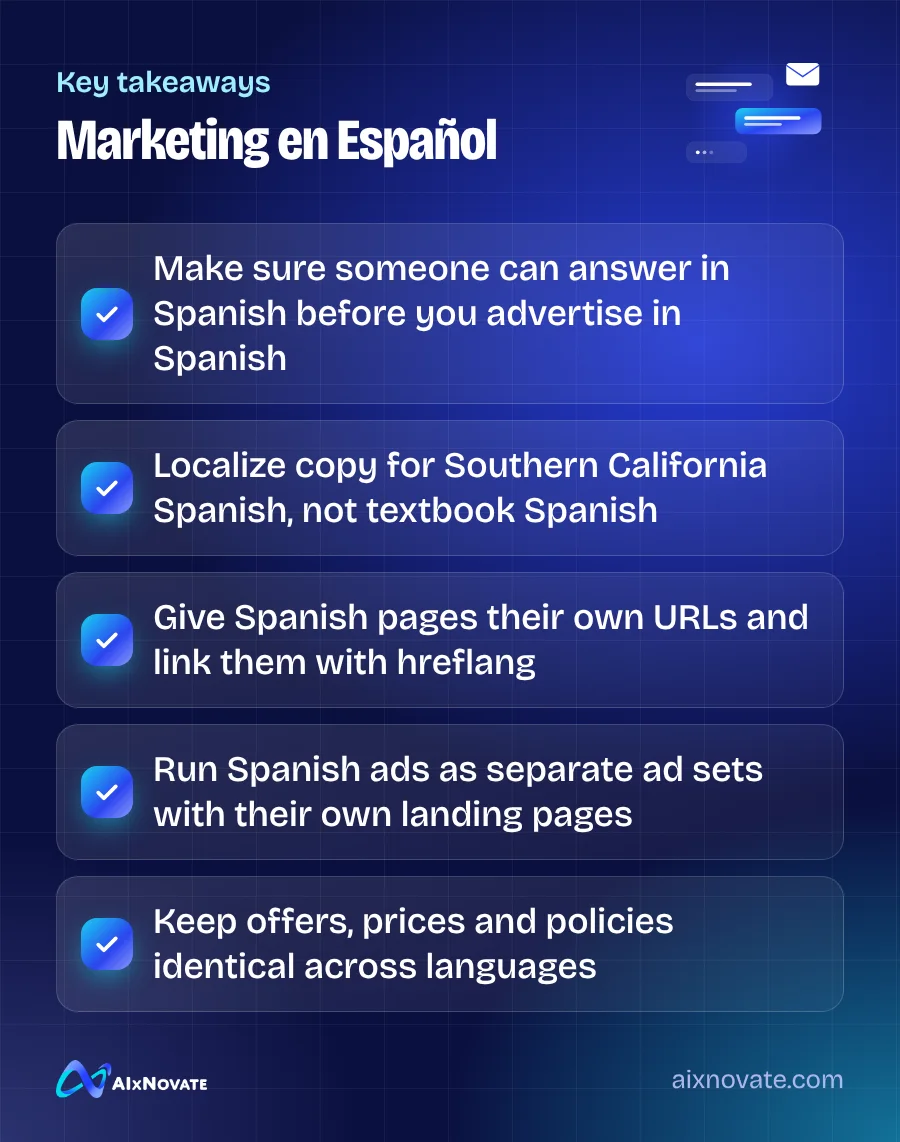
- Hire or contract a fluent writer familiar with Southern California Spanish, rather than relying on machine translation for public copy.
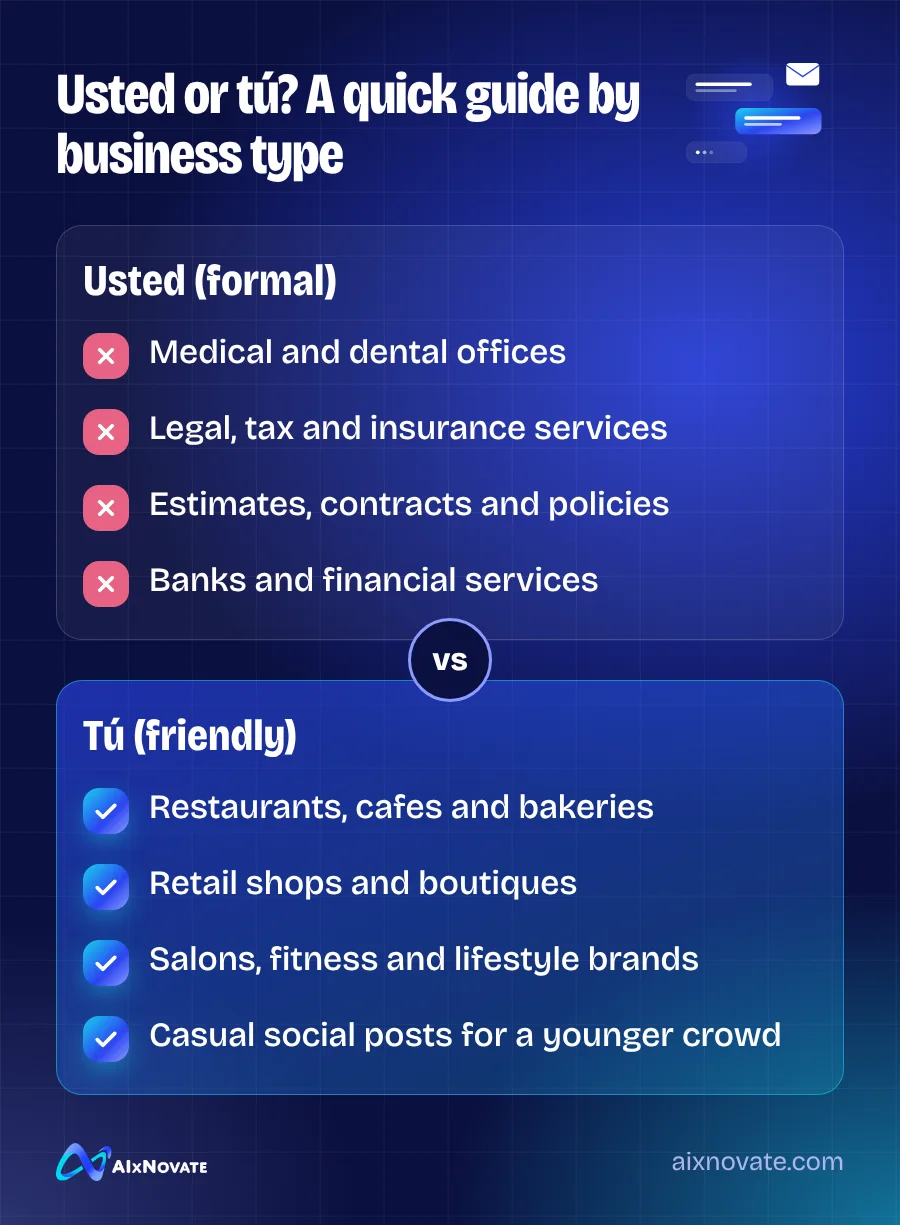
- Choose "usted" or "tú" deliberately. Professional services often use "usted"; restaurants, retail and lifestyle brands may prefer "tú." Stay consistent.
- Localize, do not just translate. Adjust examples, holidays and promotions. A December promotion might reference posadas or Día de los Reyes for some audiences.
- Keep industry terms clear. If customers commonly use an English term, such as "smog check" or "co-pay," it can be fine to keep it with a short explanation.
- Check accents and punctuation: á, é, ñ, ¿ and ¡ should display correctly everywhere, including your website fonts and print files.
Spanish pages on your website
A single "Español" page with a paragraph of translated text is better than nothing, but it rarely brings in search traffic. A better approach:
- Create Spanish versions of your homepage, main service pages and contact page, each on its own URL, such as /es/servicios/.
- Add a language switcher labeled "Español" and "English" at the top of every page.
- Write Spanish page titles and descriptions so search results appear in Spanish.
- Connect English and Spanish versions using hreflang tags, explained in Google's guide to localized versions of pages.
- Make sure forms, error messages and thank-you pages are translated too.
If you use AI for a first draft, our guide to translating marketing with AI explains where a fluent human still needs to step in. And if Spanish pages get visits but few calls, our article on fixing a website that gets visitors but no leads is worth a read.
Channels that reach Spanish-speaking customers
The right mix depends on your business, but these channels are common starting points in central Orange County.
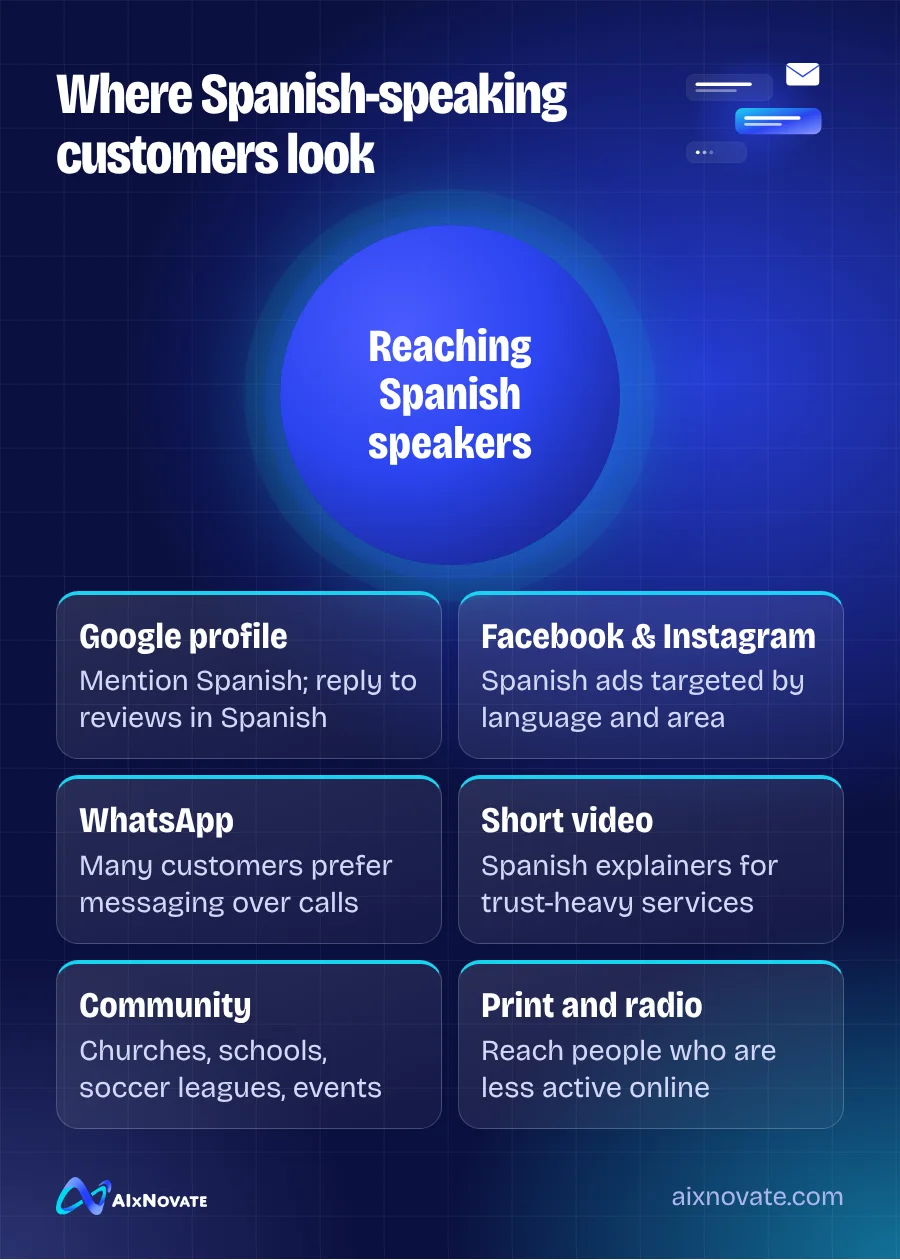
- Google Business Profile: Mention Spanish in your description, reply to Spanish reviews in Spanish, and post occasional updates in both languages.
- Facebook and Instagram: Popular with many Spanish-speaking families. Run Spanish ad sets targeted by language and location. The Meta Business Help Center explains language targeting options.
- WhatsApp: Many customers prefer messaging over calls. A WhatsApp Business number, listed clearly, can lower the barrier to contact.
- YouTube and TikTok: Short explainer videos in Spanish work well for services that need trust, like dental, legal or home repair.
- Community presence: Churches, schools, soccer leagues and local events remain powerful for word of mouth.
- Print and radio: Spanish-language flyers, local papers and radio can still reach customers who are less active online.
Reviews and word of mouth in Spanish
Spanish-speaking customers often rely on recommendations from family, coworkers and neighbors. Encourage satisfied customers to leave an honest review in whichever language they prefer, and reply to Spanish reviews in Spanish. A profile with recent reviews in both languages tells new customers, before they ever call, that people like them have been well served.
Running Spanish ads without wasting budget
- Separate campaigns or ad sets by language. Mixed-language ads confuse the platform's targeting and the viewer.
- Send Spanish ads to Spanish landing pages, never to an English homepage.
- Use Spanish keywords that people actually type, including common misspellings and missing accents, such as "dentista cerca de mi."
- Track calls and form submissions by language so you can see which campaigns produce customers.
- Review results weekly for the first month, then adjust targeting and copy.
Spanish ads only pay off when the experience after the click, from the landing page to the person who answers the phone, is also in Spanish.
Frequently asked questions
Can I use Google Translate for my Spanish website?
Machine translation is useful for drafts and internal understanding, but public pages should be written or reviewed by a fluent speaker. Automated translations often miss tone, regional vocabulary and industry terms, and errors in prices, policies or medical and legal content can cause real problems. Readers notice awkward Spanish quickly, and it can undermine trust in your business.
Should my Spanish ads target Garden Grove or Santa Ana?
Target where your customers actually come from. Check your customer addresses, Google Business Profile insights and call records. Many central Orange County businesses draw from both cities plus nearby areas like Westminster, Anaheim and Stanton. Start with a reasonable radius around your location and narrow it once you see which areas respond.
Do Spanish-speaking customers prefer calls or messages?
It varies by age and service. Many customers prefer texting or WhatsApp for quick questions, while complex topics like medical, legal or major repairs often lead to phone calls. Offer both, make sure each channel is answered in Spanish, and track which one brings more appointments so you can staff accordingly.
Our guide to bilingual marketing in Garden Grove covers more multilingual tactics. If you would like help planning your approach, you can book a free 30-minute consultation; Spanish content is part of our digital and social media marketing work.